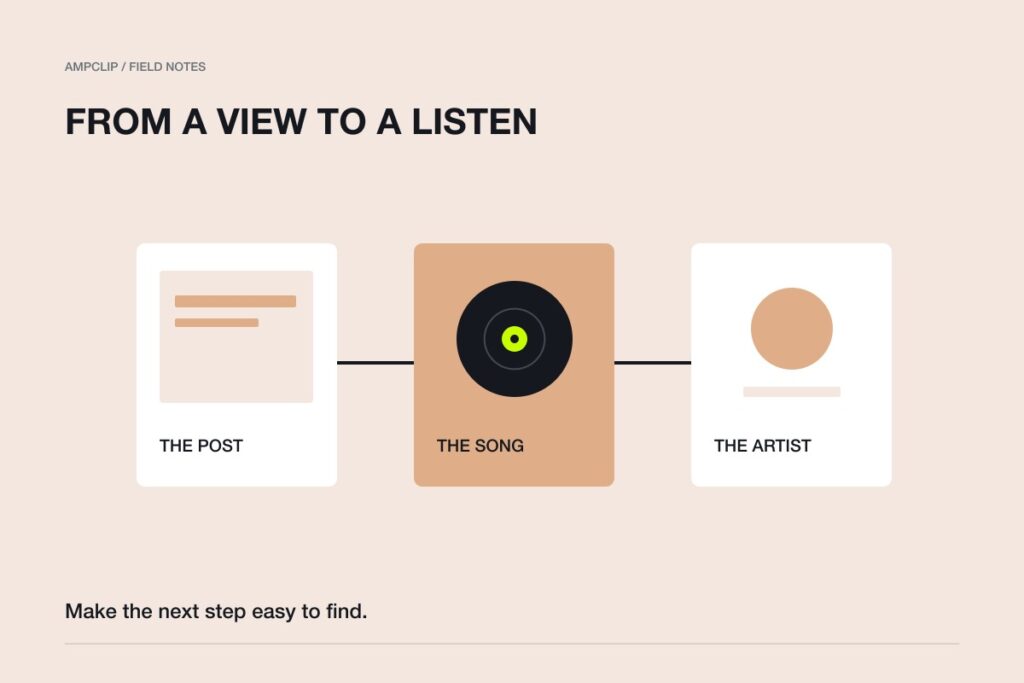
To turn a song’s mood into TikTok content, describe the feeling in a specific situation, choose a person who would recognize it, and give that person a reason to swipe. Then match the images and sound excerpt to the premise. A useful creative brief connects song → situation → audience → hook family → slide sequence.
“Make something sad” leaves too many choices open. “Make a photo story about the first weekend after a breakup, when you keep reaching for your phone” gives you a situation to write and pictures to look for.
What should you listen for in the song?
Listen to the excerpt you intend to use, rather than planning solely from the full track’s genre.
Write down three things:
- Energy: restless, restrained, playful, heavy, buoyant, or another description you can explain.
- Emotional movement: what changes during the excerpt? Does tension build, the voice soften, or the chorus open up?
- Themes: situations or ideas supported by the words, or your interpretation if the track is instrumental.
Separate a lyric’s explicit subject from your interpretation of the sound. If you wrote the song, include what you wanted to express. If someone else wrote it, avoid presenting a guessed meaning as the artist’s intention.
For choosing the excerpt itself, use how to choose the best part of your song for TikTok.
How do you turn a feeling into a post someone would recognize?
Move from an abstract emotion to an observable moment.
| Starting feeling | Specific situation | Illustrative opening |
|---|---|---|
| Loneliness | Moving somewhere where nobody knows you | Your first Sunday in a city where you know no one |
| Relief | Stopping the habit of checking for a message | The first evening you forgot to check your phone |
| Restlessness | Wanting a change while repeating the same week | Small signs you are ready to leave your hometown |
| Playfulness | A tiny annoyance feeling disproportionately dramatic | Minor inconveniences that can ruin an otherwise good day |
These are writing prompts, not performance-tested hooks. Choose the situation that fits your actual track and intended audience.
Read the opening aloud. It should sound like something a person might say, and it should make a promise the rest of the post can fulfill.
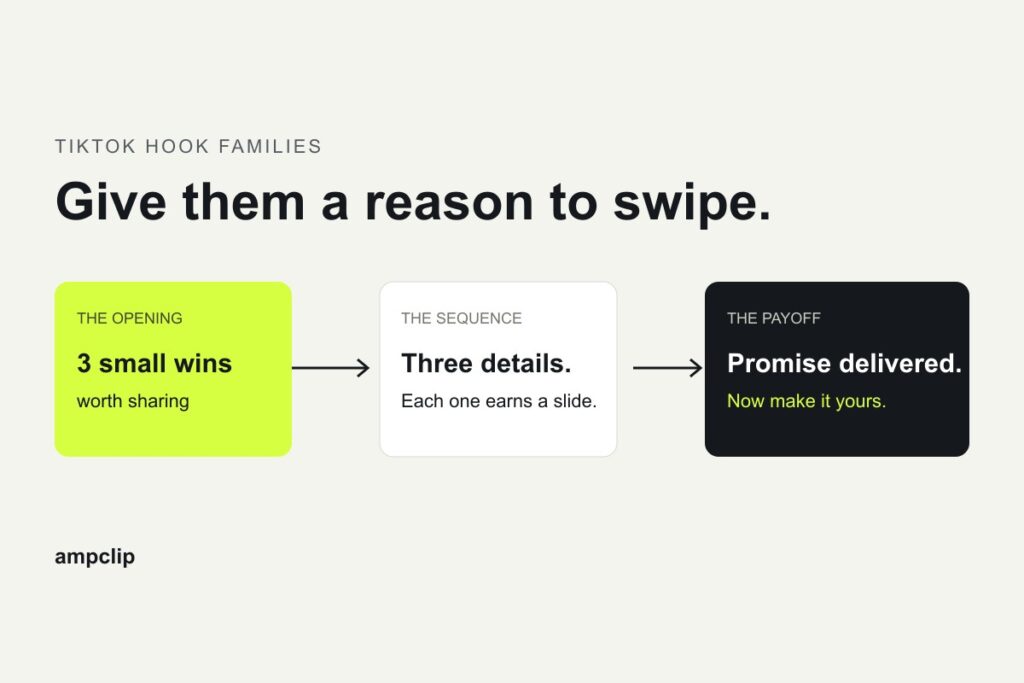
Choose a hook family before writing the slides
An angle tells you what the post is about. A hook family tells you what the opening promises and how the body delivers. The same starting-over song could support a private thought, a useful list or a genuine recording story.
Three real creator structures help make the distinction:
- Private thought: @comingofagemoments sustains a handwritten admission about closeness, then closes with a picture of two people by water. The emotional premise does not need to turn into a list of advice.
- Numbered promise: @musicluvr20 delivers a five-artist countdown with photos and personal reasons. A number creates a finite job for the body.
- Before and after: @mystickerroom moves from an empty room and unassembled stickers to the completed scene. Comparable images make the change visible.
These are independent creator references, visually reviewed on September 18, 2026. They show sequence choices, not verified results for your music. Adapt their structures using your own words, photos and true details.
Browse Private thought + Starting over, Numbered promise or Before and after. The hook-family guide explains all 14 families.
Which content angle fits: emotional, interest, or news?
Start with the connection you can explain most clearly. You do not need all three in every campaign.
Emotional: help someone recognize an experience
Use a concrete observation, a short story, or a list of behaviors.
A published AmpClip relationship carousel, built around “Mosquito” by Archer Oh, opens with “Signs you were in a connection that only took from you.” Its following slides describe specific patterns: plans revolving around the other person’s convenience, contact mainly when they needed support, and good news receiving little celebration.
The opening establishes the subject; the observations give the reader something to compare with their own experience. That is our creative interpretation of the post. It does not establish that these are the song’s literal themes or the artist’s intended meaning.
This is a published creative example, with no streaming attribution or artist endorsement.
Interest: offer something worth discovering
Choose a subject connected to the audience you want to reach. Outdoor venues, local scenes, vintage instruments, or a particular hobby can give a carousel a clear topic.
For the fictional track used below, an interest angle could be a guide to three places that make a new neighbourhood feel familiar: a café, a small venue and a public park. The places provide the subject; the song provides a warm, forward-moving soundtrack.
This is an illustrative brief. Use real, checked places and permissioned photographs before publishing a local guide. No TikTok result is attached to it.
An interest angle needs more than attractive pictures. Decide what the reader learns, discovers, or gets to discuss by the end.
News: give a relevant audience a useful update
Use news when you follow the subject closely enough to check the reporting and explain why the update matters.
For a music scene page, a local venue announcement could provide a relevant subject. An unrelated breaking story added only because it is popular is a weaker creative connection.
Write down the source, event date, and what is confirmed. Label archive or illustrative pictures accurately. Check the post again before publishing, because a prepared news item may become outdated.
This is a proposed approach. AmpClip’s News format currently requires manual generation; do not plan it as an unattended news feed.
A complete brief for one fictional song
This exercise uses Somewhere New, a fictional demo track. Imagine a loose guitar arrangement and a chorus about finding your footing after a move. The example does not claim a real recording, artist story or campaign result.
- Musical passage: the chorus where the arrangement opens up.
- Listener: someone adjusting to a new neighbourhood.
- Situation: the first week familiar details start to appear.
- Visual material: photographs you own of ordinary streets, rooms and public places.
- What to avoid: a grand transformation story or claims that a move solves every problem.
Angle one: an emotional private thought
Family: Private thought. Listener: someone finding their footing after a move.
Original illustrative script
- i didn’t tell anyone i was starting over.
- i changed one small thing.
- then made room for another.
- some beginnings can stay quiet.
This is the explorer’s quiet starting-over adaptation. A cleared surface, morning light and a small change in one room can sustain the thought. The chorus supplies forward movement; the pictures do not have to prove a dramatic reinvention.
The lesson from the creator reference is restraint: the thought can be complete on the cover. For a real artist, first-person details must be theirs, or clearly presented as the song narrator’s perspective.
Angle two: an interest guide with a numbered promise
Family: Numbered promise. Listener: someone exploring a new neighbourhood.
Original illustrative outline
- 3 places that make a new neighbourhood feel familiar.
- A café where you can hear yourself think.
- A small venue with a programme you actually want to follow.
- A public spot worth taking the long route through.
- Which place made your neighbourhood feel like yours?
Before posting, replace the three categories with named places you have checked. Give one useful detail about each and use relevant, permissioned photos. Like the creator’s artist countdown, the body owes the reader the exact number promised. The track can supply the guide’s welcoming tone.
Angle three: an artist story with a real before and after
Family: Before and after. Listener: someone interested in how the track was made.
Original illustrative production plan
- The corner where this song started.
- Image direction: the actual space before the recording setup.
- Image direction: the same viewpoint with the recording setup in place.
- One true detail about what changed in the recording.
- Somewhere New — by your artist name.
For this fictional exercise, those photographs and recording details do not exist. For a real track, supply the actual pair and the artist’s account of the session. If you have only unrelated room pictures, choose another family. The creator reference works because the images show comparable states of the same thing.
Why keep three angles in the same brief?
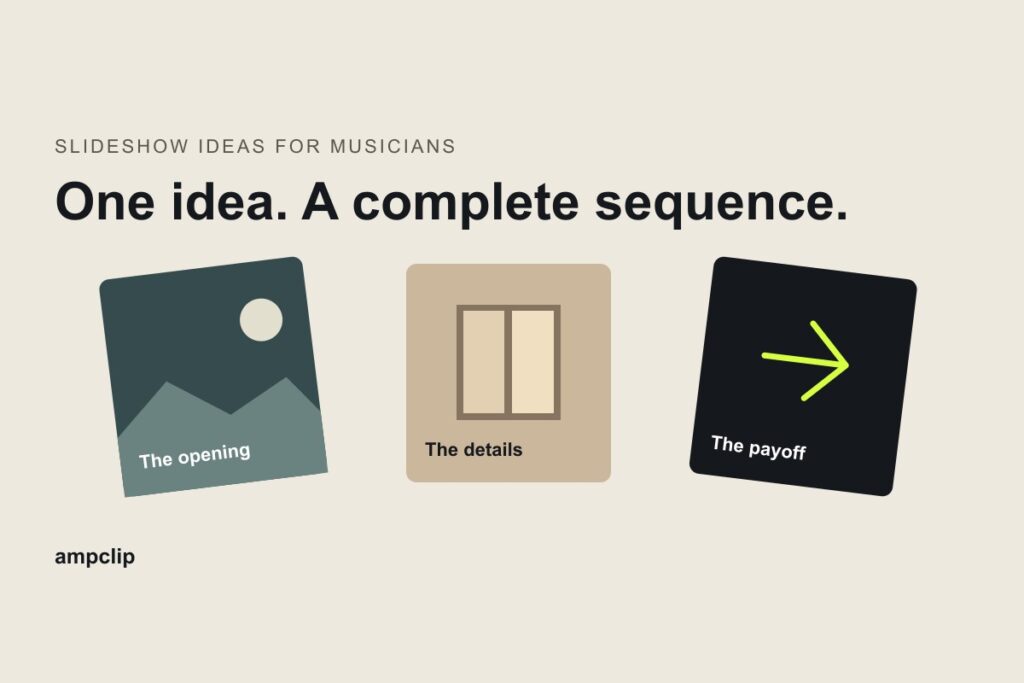
The song can stay the same while the reader’s reason to swipe changes: recognition, discovery or a true artist story. The family changes the work the slides must do: sustain a thought, deliver three places or show a real change. Each post needs its own opening and payoff. Simply changing the first line of an otherwise identical deck does not create three distinct ideas.
News can also belong in a campaign when a real, relevant story is available. Verify it separately; song interpretation cannot supply the facts.
Fill in your own song brief
Download the editable Word worksheet or printable PDF. Fill in the track, listener situation, three angles, image sources and excerpt before writing the posts.
For more opening structures, browse the free hook explorer by family and feeling, or search a creator or listener situation. The optional starter pack adds 12 complete scripts and an adaptation worksheet.
Use the research to edit the sequence, not choose a magic length
In our selected September 2026 sample of 3,715 public Photo Mode posts, the median was six slides and the mean was 8.5. Those figures describe a non-random sample, not an experiment showing what earns reach. Read the research method and sample limits before treating the numbers as a creative rule.
Apply that distinction to the brief: if your opening promises three local discoveries, deliver three checked discoveries and a clear ending. If a private thought resolves in four slides, adding two more solely to reach the median adds no value. The useful question is what each slide contributes to the promise.
What should you check before publishing?
Read the post with and without the audio.
With the sound playing, check whether the pace and emotional tone work together. Without it, check whether the text and pictures still form a coherent post. A photo post should give people something to read or look at while the track plays.
Then check four details:
- Does the cover accurately describe what follows?
- Does each image match its slide, and do you have permission to publish it?
- Can someone identify the artist and song?
- Did you actually choose the intended sound before publishing?
A streaming link in the caption does not complete that sound-selection step. The slideshow how-to covers the publishing workflow.
How can you test the brief?
Create two posts with the same broad situation and different openings. Keep a note of what changed, publish them, and capture results at comparable ages.
Use the responses to revise the next brief. A comment asking “what song is this?” may be useful evidence that the soundtrack attracted attention. It does not show a completed stream. Small samples and changing distribution limit how confidently you can attribute a result to the opening.
If you need more starting formats, use these ten slideshow examples. This brief helps you choose and adapt one.
Where does AmpClip help?
AmpClip starts from your track and available lyrics to suggest content directions and prepare photo slides and captions. Review those ideas against your brief, then choose the ones that fit the song and audience.
Supported recurring formats can prepare new posts on your schedule. You still select the exact sound and excerpt and finish publishing inside TikTok. Interest and News availability depends on the current studio rollout, and News currently requires manual generation.
Start with a song, choose one situation, and use the first post to refine the brief.
Frequently asked questions
Can an instrumental track have a content brief?
Yes. Use the energy, arrangement, and your own interpretation to choose a situation or subject. Describe that interpretation honestly rather than inventing a lyrical meaning.
Should the song title be on the first slide?
Include it when it supports the opening, such as a lyric explanation or release announcement. A story or interest post can open with its subject and identify the track through the caption, sound, or another slide.
Can I use the same brief for several posts?
Yes. Keep the audience and broad situation, then write fresh observations, stories, or openings. Each post should deliver something complete.