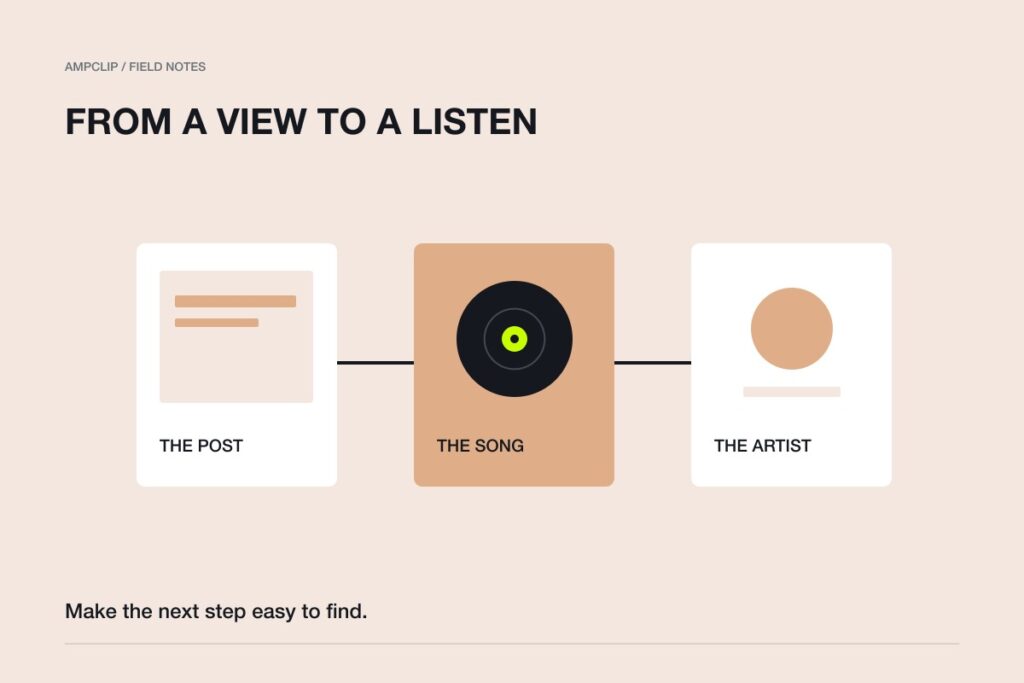
To help TikTok viewers become music fans, make the artist and song easy to identify, give interested people a clear route to listening, and publish follow-ups worth returning for. A popular post is an introduction. The next steps should help someone understand whose music they heard and why they might want more.
You will not turn every viewer into a listener. Focus on removing confusion and building a relationship with the people who respond.
Give the post one clear job
A photo story can introduce a feeling. A performance can introduce your sound. A release announcement can tell existing followers the track is available.
Trying to ask for a stream, follow, save, comment, share, and email signup in one post makes the next step difficult to choose. Decide what makes sense for the audience encountering that piece.
For a discovery post, it may be enough to let someone hear the music and identify the track. For a follow-up aimed at interested listeners, the full recording or next performance can be the useful invitation.
Make the artist and song findable
Check your profile on a phone as if you have never seen it. Can you tell that it belongs to a musician? Does the artist name match the name people need to search? Is the current song easy to identify?
Use a clear caption, relevant on-screen text, or a follow-up comment where appropriate. If someone asks for the song name, answer directly. “Link in bio” alone does little for someone trying to establish which recording they heard.
Check the sound attached to your post as well. If the campaign depends on the library version, use the sound setup guide to confirm it.
Choose a listening route your account supports
Where a clickable profile link is available, use a destination that opens the correct song and identifies the artist. Check it on a phone, including the route into the chosen listening service.
Do not assume every account has the same profile-link features. TikTok’s account guidance describes website-link eligibility, including the follower threshold for Personal Accounts. Check the options shown in your account before writing instructions that depend on them.
If you cannot use a clickable link, make the artist and song title easy to search. A clear name is useful even when a link exists, because some listeners will search directly.
A listening page with many unrelated destinations can hide the track you are discussing. Put the current action where someone can see it without decoding your whole catalog.
Plan the next piece before the discovery post takes off
A follow-up should develop the connection someone already showed, not simply repeat “please stream.”
| Response to the first post | Useful follow-up | Invitation |
|---|---|---|
| People ask about a lyric | Explain the actual story and play the line. | Hear the full song. |
| People like a performance | Share another section or alternate arrangement. | Return for more performances or hear the recording. |
| People connect with a photo story | Show another true detail from the same world. | Tell your own story or explore the track. |
| People ask about an instrument | Demonstrate its role in the arrangement. | Watch the fuller breakdown. |
| Existing listeners want release information | Publish an unmistakable release update. | Open the correct listening destination. |
Keep the music present. A general-interest post can reach people who enjoy its subject without noticing the track. A follow-up can make that connection clearer without pretending every viewer is already a fan.
Our ten slideshow breakdowns and song-section guide can help plan the sequence.
A hypothetical path from one photo story
Imagine a song about leaving home. The first post uses your own photos of familiar places. A viewer comments that the lyric reminds them of moving away.
You answer with the song title and a thoughtful reply. Your next post explains the line while playing it. A separate performance shows what the whole chorus sounds like. Your profile makes the released recording easy to find.
Someone who returns can hear more music and recognize the artist behind it. That is the relationship you are trying to build. The example describes actions, not a forecast of how many fans those posts will create.
Study the introduction; plan the follow-up separately
Julia Wolf’s eight-slide Alice Cullen post gives a Twilight audience a specific fan opinion and character imagery, with “In My Room” attached as the sound. The full case separates dated TikTok reach from the song’s wider streaming history.
The transferable choice is a recognizable introduction. A follow-up for your own campaign might identify the song clearly, perform the passage, or explain the writing detail people asked about. Those are proposed next steps, not a claim that we measured Wolf’s viewer-to-fan funnel or that she published this sequence of follow-ups. Look for return interest in the artist as well as reactions to the original subject.
Offer a way to stay connected
Once someone is interested, give them a reason to follow or return: another performance, a writing series, release updates, or upcoming shows.
If you maintain an email list, explain what people will receive and let them subscribe voluntarily. A listener should not have to sign up for a mailing list just to discover which song played in your TikTok.
Be realistic about the channel you can maintain. A neglected newsletter does not become useful simply because you added it to a listening page. Pick one route for ongoing updates and keep its promise clear.
Watch for return interest as well as exposure
Views tell you the post circulated. Song-related replies, repeat engagement from identifiable listeners, available profile activity, and listening-link clicks can give you more specific clues.
Spotify listeners, saves, follows, and listening over time add context, but do not identify every external source. Record other activity such as playlist adds and shows. Our measurement guide separates those signals.
Do not label all followers “fans” or count every click as a stream. Use the observations to decide which music and stories people want more of.
Fix the bottleneck you can observe
If viewers ask for the title, improve identification. If people reach your profile but cannot find the song, simplify the listening route. If they respond to the subject but ignore the music, try a more direct performance or lyric connection.
If interested people return, develop the series. You do not need to abandon a good idea every week in pursuit of a completely new format.
AmpClip can help prepare photo carousels around a track’s themes and mood. Review them as introductions to your music, and pair them with clear artist information and relevant follow-ups.
Viewer-to-fan questions
Should every post say “stream now”?
No. Give each post a purpose and make the song findable. Direct release updates are useful alongside creative introductions.
What if I get views but few followers?
Look for interest in the music and check identification, profile clarity, and the next piece available to watch. Views alone do not explain why people did not follow.
Do I need to show my face?
No. Photo stories, original artwork, instruments, and writing details can introduce the artist’s world. Our faceless promotion guide offers more options.
Should I keep promoting the same song?
Continue while you have useful ideas and a response worth developing. Set a review date; our post-release plan gives you a manageable starting structure.