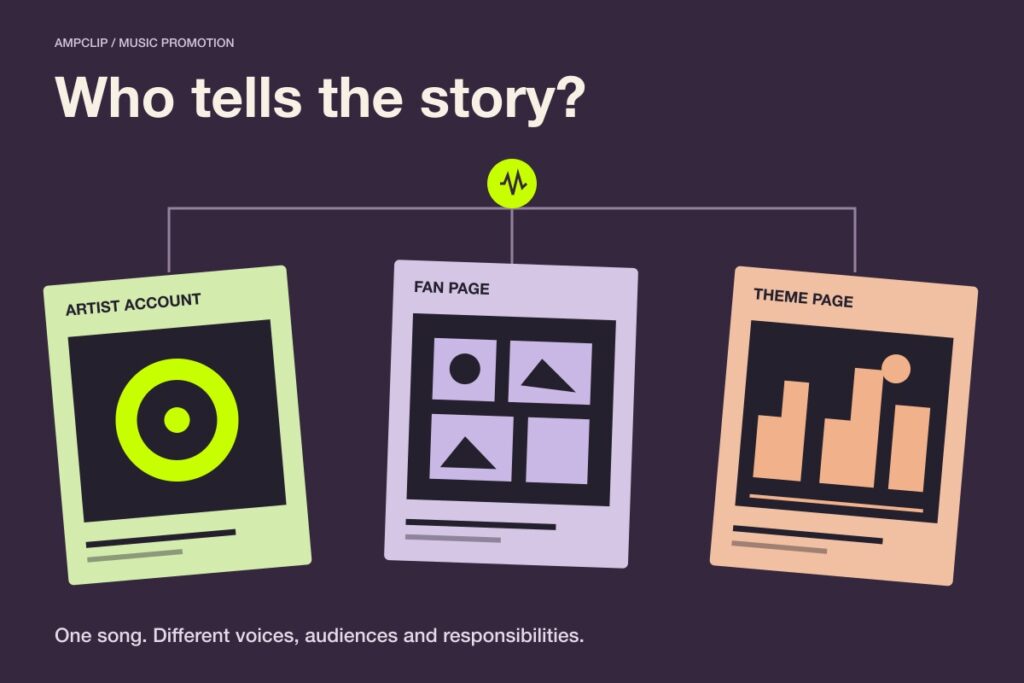
Start on your artist account when the content fits your music and identity. Build a separate promo account when you have a subject people would follow and enough material to sustain it. Work with an existing theme page when its audience and format fit the song and you can agree on a clear piece of work.
Those routes give you different kinds of control. A page you run gives you room to develop ideas over time. An existing page gives you access to its established audience, while its operator decides what belongs there.
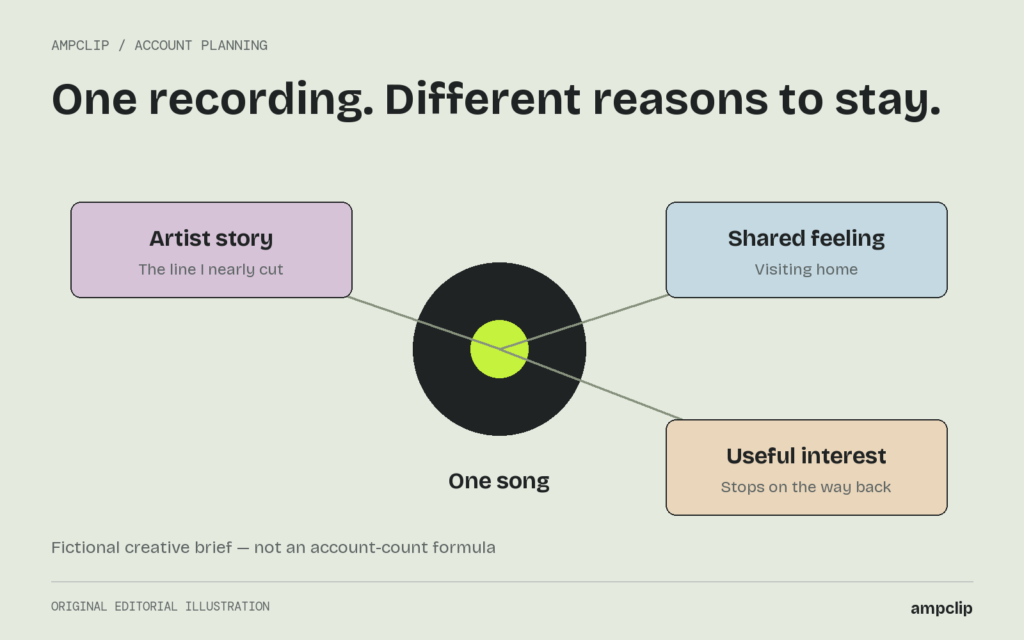
Julia Wolf, Zach Top and Lyrah illustrate three different relationships between music and posting accounts. Their examples help answer the useful question: who should publish this song’s next post, and why would someone want to watch it?
What is a TikTok music promo account?
Here, a music promo account means a profile used to introduce people to an artist or recording. That might be the artist’s main account, a separate page their team runs, a commissioned fan page, or an independent theme page using the sound.
A fan page centers on an artist. A theme page centers on a subject, feeling or community: country-music fandom, late-night journeys, gardening or a particular kind of humor. A song can become part of that experience without being the headline.
Ownership is a separate question. “Fan page” does not tell you who operates it, and finding a song under a post does not establish a paid campaign. People sometimes call secondary profiles “burners”; use that term carefully rather than assuming every page is a secret artist account.
| Route | What the audience follows | What you need to organize |
|---|---|---|
| Your artist account | The artist, their music and the interests they share | Content that makes sense as your own voice |
| A theme page you operate | A recurring subject or experience | A clear page promise, usable material and a publishing routine |
| A fan page commissioned by your team | An artist-focused stream of stories, photos or clips | An operator, access arrangements, content approval and reporting |
| An existing independent theme page | The page’s established subject and style | A credible fit and, if arranging work, an agreed deliverable |
When should you keep posting on your artist account?
Start here if the idea expresses something you would naturally share: a fandom you belong to, the story behind a song, a place you know or an opinion that fits your world.
You can publish more than release announcements on an artist account. A post can begin with a subject the viewer already cares about, with your recording as its soundtrack.
Julia Wolf: a fandom post on the artist’s own account
Julia Wolf is an alternative pop and rock artist whose “In My Room” connected with the Twilight audience. On January 15, 2025, she posted an eight-slide Alice Cullen carousel from @juliawolfnyc, her own artist account.
The opening called attention to Alice’s appearance: “lethal face card no one talks about enough.” The following slides used short reactions and more character stills. “In My Room” appeared in the sound line; the carousel’s subject was the character.
Why the construction is useful: a viewer could understand and enjoy the post before knowing Wolf’s music. The first slide invited a fandom reaction, and the remaining images delivered more of the thing it promised.
AmpClip’s October 7, 2026 capture recorded approximately 16.9 million plays. Separately, The FADER reported more than 41 million Spotify streams for “In My Room” on September 9, 2025. That broader listening figure is not an attributed result of this carousel.
The decision for another artist: if the subject already belongs in your world, try it on the account you have. A separate profile is not a prerequisite for interest-led music content. Study the structure rather than treating another creator’s film imagery as permission to reuse it.
See the complete Julia Wolf breakdown and dated evidence.
When does a separate account make sense?
A separate page earns its place when it has a reason to exist beyond repeating the same release announcement.
Before creating one, finish this sentence:
People would follow this page for , even if they had not heard my song.
Then write three genuinely different post premises. If all three boil down to “please listen,” you probably need stronger ideas before another profile.
An artist-focused fan page can also have a distinct voice and workload. It might publish playful stories, performance memories or photo collections while the main account handles announcements and direct communication.
Zach Top: fan pages built as commissioned work
Zach Top’s country-music campaign provides a documented example of that division. Hundred Days Digital says Leo33 and Major Bob hired it to build and create content for three fan pages. The agency names accounts including @zachtopsjeans and @zachtopfanclub.
One five-slide “I Never Lie” post on @zachtopsjeans, published December 14, 2024, constructs an imagined exchange using photos of Lainey Wilson, Reba McEntire and Top. It moves from a country-music opinion to Top’s appearance, then finishes with lyrics while his song plays.
Read it as fan-created storytelling, not a transcript or an endorsement from the people pictured.
AmpClip’s October 7, 2026 capture recorded approximately 976,000 plays for that post. Separately, Hundred Days reports 50 million views across its fan-page work. The agency total covers many posts; it is not the result of this one carousel.
The decision for another artist: operating extra pages is a content and staffing choice. Establish who writes, sources material, approves, publishes and responds. A fan-page name does not remove those jobs.
Read the Zach Top fan-page case study.
What should you check before starting your own page?
Write down:
- The promise: what someone gets by following.
- The material: photos, original writing or other assets you can actually use.
- The voice: who is speaking, and which personal claims they can honestly make.
- The operator: who owns the login, reviews posts and handles replies.
- The capacity: the time available after your existing artist-account work.
- The listening route: how an interested viewer identifies the recording.
For profile settings and the first week of posts, use the theme-page setup guide. This article helps choose the route; that guide handles the setup.
When should you work with an existing theme page?
Consider an existing page when you can point to something specific in its content that your track supports.
A reflective song might suit a page about quiet evenings. A country song might fit a page whose audience enjoys country stories. Neither match follows automatically from a genre label: inspect the actual posts, sound choices and visible responses.
Lyrah: a song used by third-party theme accounts
Lyrah’s “Run Out” appeared under two posts from @somethingicouldntsay, a quote account whose publicly captured bio invited sound-promotion inquiries.
The first post and second post, both published May 13, 2026, paired short quote-led videos with the track. AmpClip’s October 7 capture recorded approximately 29,100 and 25,600 plays respectively.
These were videos, not swipeable Photo Mode carousels. Their usefulness as examples is the relationship between the page’s familiar format, the emotional subject and the accompanying song.
The public posts establish that the account used “Run Out.” Its promotion bio establishes that it invited that kind of business. Neither establishes that Lyrah booked or paid for these posts. Supported streaming results were unavailable in our case study.
The decision for another artist: assess the exact format and fit before making an approach. A successful quote-video page may not offer the photo-carousel placement you have prepared.
Read the Lyrah theme-account analysis.
What should you agree before arranging a post?
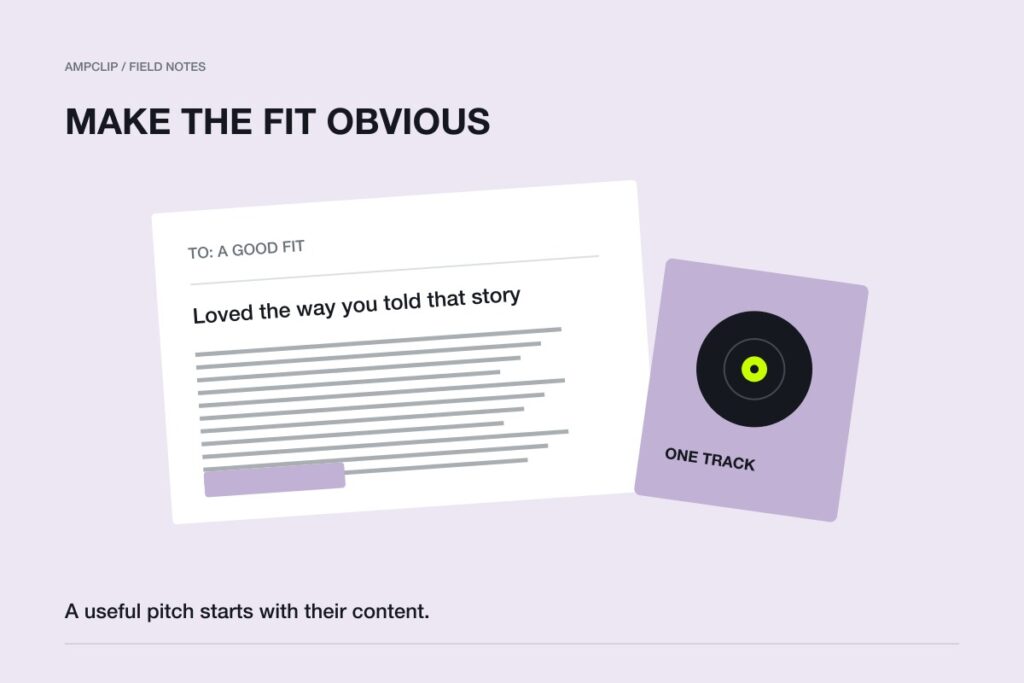
Ask for the exact handle and what the operator will deliver. A finished post they create and a placement of slides you supply involve different work.
Settle:
- Format, song version and intended passage.
- Who prepares the creative and supplies image permissions.
- Approval, revisions, publication timing and expected time live.
- Fee, reporting and what happens if the agreed work cannot be delivered.
- Any repost or advertising permissions you need.
Check TikTok’s content-disclosure requirements and the applicable music permissions for the intended post.
Use our creator and theme-page pitching guide for the shortlist, message templates and collaboration brief.
Which route fits your song right now?
Choose the route you can prepare and evaluate. A larger page is not automatically a better match, and an additional account is not automatically additional useful reach.
| Your starting point | A sensible first route | What to check |
|---|---|---|
| The subject fits your identity and you have a complete post idea | Your artist account | Does the post work for someone who has never heard of you? |
| You have a distinct page promise, several usable ideas and an available operator | A theme page you manage | Can the page sustain its subject without recycling the same premise? |
| You want an artist-focused fan voice and can resource the ongoing work | A commissioned fan page | Who controls access, prepares posts and reports what happened? |
| An established page has a clear fit and is open to approaches | An existing theme page | Do its actual format and quoted deliverable match what you need? |
| You have no finished concept, no shortlist and no time to operate another page | Prepare one complete post first | What question will publishing it help you answer? |
Worksheet: which route fits this song?
Copy this worksheet into your campaign notes. Fill it in for one recording before committing to another account or a placement.
Part 1: define the opportunity
| Field | Your answer |
|---|---|
| Artist, track and exact version | __ |
| Correct TikTok sound link and candidate passage | __ |
| Listener situation or interest | __ |
| Why this song belongs in that situation | __ |
| One complete post premise | __ |
| Images or other material available, with permission status | __ |
| What an interested viewer should do next | __ |
| Weekly time available and named operator | __ |
| Spending cap, if any, including production costs | __ |
| Review date and the decision you want to make | __ |
Part 2: compare the routes
Use Ready, Needs work or Not a fit, then add a reason. These are planning prompts, not a numerical prediction of success.
| Question | Artist account | Page you manage or commission | Existing theme page |
|---|---|---|---|
| Can I name the audience fit? | __ | __ | __ |
| Do I have a suitable concept and usable material? | __ | __ | __ |
| Is there a person responsible for getting it published? | __ | __ | __ |
| Can I afford the time or quoted work? | __ | __ | __ |
| Can I identify the song clearly and obtain useful reporting? | __ | __ | __ |
Part 3: make one decision
First route: __
Reason it fits now: __
What must be ready before publication: __
Who owns the next action: __
What we will observe, and when: __
Other promotion running in the same period: __
We will continue, change or stop based on: __
A completed example
Illustrative planning example, not a real artist campaign: Mara Vale has a fictional single, “Kitchen Light at 2AM,” about coming home after a long shift. She has original night-travel photos and one finished carousel, but nobody available to run a second account.
Her post follows the small rituals of arriving home: leaving shoes by the door, turning on the kitchen light and finally sitting down. The song excerpt fits that transition.
Her worksheet points to the artist account first. She can publish a coherent post now and review whether people respond to the subject, identify with the routine or ask about the music. Creating another account would add work before she has learned anything from this idea.
If she later researches a night-shift theme page, that becomes a separate option with its own format, cost and brief.
How do you tell whether a promo account is helping?
Keep the posting result and the music result separate.
For each post, record the URL, account, format, sound and publication time. Capture available views, shares, saves and music-related responses at a consistent post age. Record what is unavailable rather than replacing it with an estimate.
For the song, review listening trends alongside the dates of posts, placements, ads, playlists and other activity. A rise during the same week is useful context; it does not isolate the contribution of one account.
Julia Wolf’s broad listening milestone, Zach Top’s agency-reported fan-page totals and Lyrah’s individual post views describe different outcomes. They cannot be turned into a common “views to streams” conversion rate.
Use the TikTok-to-Spotify measurement guide for the reporting limits, or the 30-day theme-page test if you choose to operate a page.
Where AmpClip fits
If your next step is an artist post or a theme page your team manages, AmpClip can prepare editable photo posts and captions around a track. For supported formats, it can prepare new posts on a recurring schedule and deliver them to your connected TikTok inbox. You choose the exact sound and excerpt and finish publishing in TikTok.
Use the hook-family explorer to develop an opening and a complete sequence. AmpClip helps with preparing the content; the account relationship, publishing decisions and evaluation still need an owner.
Common questions
Do I need a separate TikTok account to promote a song?
No. Julia Wolf’s Alice Cullen example came from her artist account. Start there when the idea fits your identity and you can give viewers a complete, interesting post.
Is a fan page the same as a burner account?
No. “Fan page” describes the subject, while “burner” is an informal term people use for secondary accounts. Check the actual operator and relationship. Zach Top’s example involves publicly documented agency work.
Can I pay an existing theme page to post my song?
Ask whether it accepts collaborations and what it offers. Agree on the account, creative work, sound, timing, permissions, disclosure and reporting. A fee pays for the agreed work, not a guaranteed number of listeners.
Should I choose the page with the most followers?
Start with fit. Inspect the actual subjects, formats, recent posts and visible audience responses. Then compare the proposed work and reporting. A follower total alone cannot tell you whether the song belongs there.
Can I tell which theme pages were paid just by looking at the sound page?
A sound page shows uses of a sound. It does not establish the commercial relationship behind every post. Look for disclosures, direct statements or documented campaign reporting before calling a post paid.
Will a music promo account increase Spotify streams?
It may introduce people to the recording, but these examples do not establish a predictable stream return. Use a clear listening route, record other promotion and evaluate TikTok activity separately from streaming trends.
Sources and capture dates
- Julia Wolf’s Alice Cullen post, published January 15, 2025. TikTok figure from AmpClip’s October 7, 2026 capture; full case evidence.
- The FADER’s Julia Wolf profile, September 9, 2025. Source for the separately reported Spotify milestone.
- Hundred Days Digital’s projects page, checked October 15, 2026. Source for the commissioned Zach Top fan-page relationship and agency-reported total.
- Zach Top fan-page carousel, published December 14, 2024. Individual post figure from AmpClip’s October 7, 2026 capture; full case evidence.
- First Lyrah quote-video post and second post, published May 13, 2026. Figures and profile observations from AmpClip’s October 7, 2026 capture; full case evidence.
The dated TikTok figures above reuse our existing research captures; they are not new live counts. The fictional worksheet example is original illustrative material.