A music slideshow needs a reason to swipe and a reason for the song to be there. A hook family helps connect those two: decide what the opening promises, then choose the words, images and musical passage that fulfill it.
Here are ten approaches: two documented music examples and eight original concepts tied to the Hook Explorer’s families. For the latter, we show a real creator reference, then a separate song adaptation. The adaptations are illustrative scripts or production plans, not transcripts or measured results.
Two documented music examples
1. Julia Wolf: let the collection deliver the fan opinion
Family lens: A collection. Julia Wolf’s Alice Cullen post, published January 15, 2025, uses eight images and attaches “In My Room.” It comes from her artist account.
The first slide makes a pointed fan observation about Alice Cullen. More character stills and short reactions follow, staying inside the fan conversation. The images deliver what the opening invites people to look at.
The case study separates dated TikTok results from streaming context. It does not measure conversion from this carousel. “A collection” is our reading of the structure, not a claim about the artist’s planning process.
Adapt it: Choose an interest you can contribute to, then assemble a coherent set of relevant images you have the right to publish. The documented post does not grant permission to reuse its stills.
2. NAOOMI: build the release world before revealing the title
Family lens: Visual reveal. Salo Moon’s portfolio describes a five-slide campaign for NAOOMI’s “Midnight Sun” release. Lifestyle imagery establishes a visual world before the title arrives on the last slide.
The agency reports publication on TikTok and Instagram, with adaptations for each platform. Its portfolio supplies creative documentation rather than a named playable post or performance figures. Our NAOOMI teardown explains those limits.
Adapt it: Choose a recognizable visual premise and make the ending resolve it. If the title arrives late, keep the artist and song findable through the caption or sound attribution. A title reveal is one use of this family; the explorer also includes a visual question-and-answer.
Eight original concepts, with creator structures to study
The following creator sequences were visually reviewed on September 18, 2026. They come from several categories and are independent of AmpClip. We use them as format references; their audio, current engagement and streaming effects were not assessed. Source photographs and surrounding writing are not reusable assets. In the adaptations, Photo only and Image direction are production instructions, not text to print on a slide.
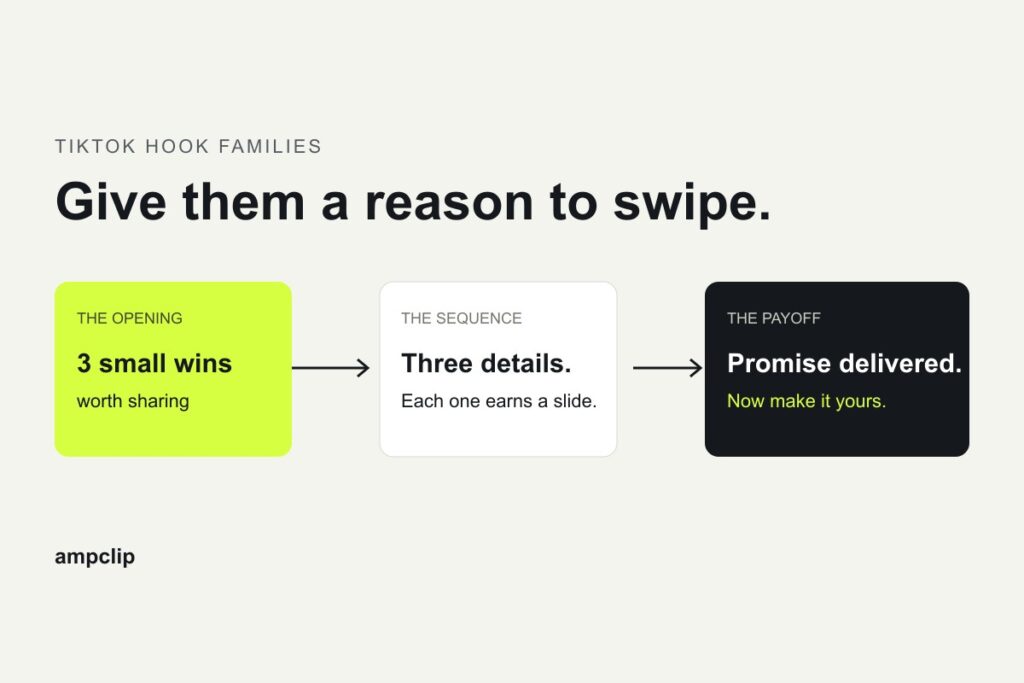
3. A small-win list for an uplifting chorus
Hook family: Numbered promise.
Real creator reference: @musicluvr20 — A countdown names five artists, with photos and personal reasons, then ends on the top choice. The count gives the reader a finish line. Use choices you can actually explain.
Original song adaptation
- 3 small wins worth interrupting the group chat for
- the thing you sent before you could talk yourself out of it.
- the first good night’s sleep after a hard week.
- the reply that started with “yes”.
- send the message. your people want to know.
Images: Fictional message graphics, morning light and friends around a table.
Musical passage: A buoyant chorus with a clear rhythmic lift.
Why the sequence holds together: Makes celebration specific without inventing a major milestone.
Adapt it: Replace the wins with details your listeners recognise. Keep the count matched to the body.
4. A late-night reply that the song can carry
Hook family: Quote and reply.
Real creator reference: @lesliebpoetry — A dismissive question is followed by a book cover and an emotionally charged poem. The creative work supplies the answer. For a song, use your own verified lyric or a scene the music supports.
Original song adaptation
- “you’re still awake?”
- the street has finally stopped asking for my attention.
- i can hear the song all the way through.
- i think i’ll stay up for this part.
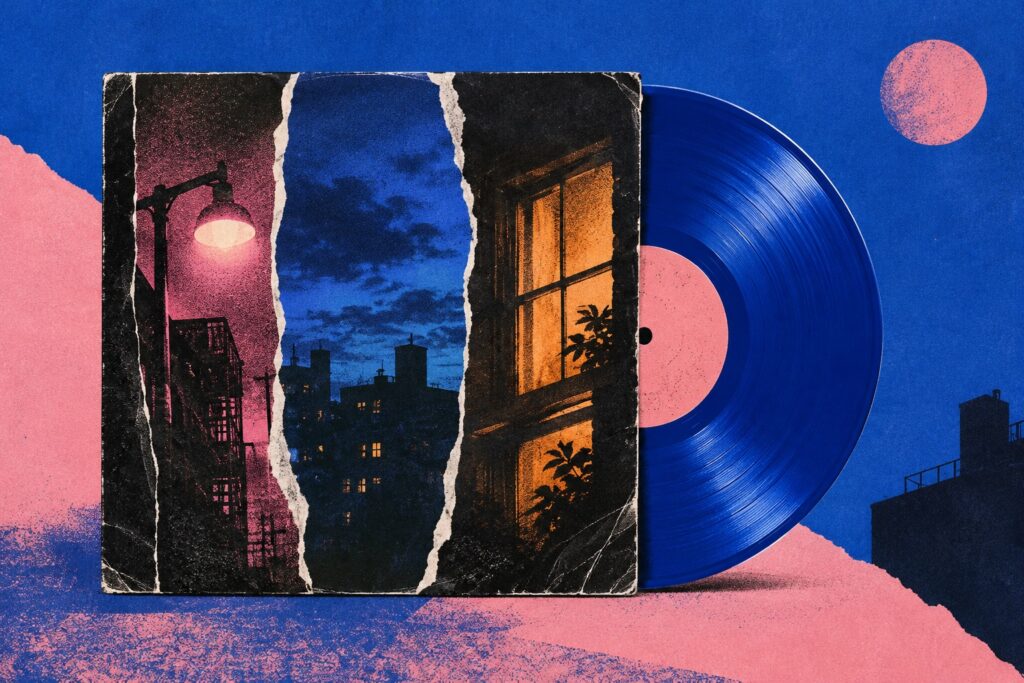
Images: A lamp, a window after dark and a quiet street.
Musical passage: A nocturnal verse or instrumental with enough space for the reply.
Why the sequence holds together: The later cards answer the opening remark through a specific late-night feeling.
Adapt it: Write an original reply or use your own verified lyric. Do not invent a quote from a real person.
5. An invitation with a specific recipient
Hook family: Specific invitation.
Real creator reference: @travelideas348 — A friend-directed Montana invitation becomes a dialogue, then a long landscape and outdoor-life montage. The images answer why someone would want to go. Individual locations in this source were not verified.
Original song adaptation
- send this to the friend who walks you home
- Photo only: a quiet street after the venue closes.
- Photo only: two shadows under a streetlight.
- Photo only: the last corner before home.
Images: Your own late-night streets and small details of a walk home.
Musical passage: A warm passage that suits the shared moment.
Why the sequence holds together: A named recipient makes the invitation shareable; the photos make the shared moment concrete.
Adapt it: Choose a real shared ritual. Let the pictures sustain it instead of adding a generic friendship speech.
6. A place told through its details
Hook family: A collection.
Real creator reference: @slideshows_4_you_28 — Ten photo-strip examples deliver the couple-pose collection named on the cover. Use actual examples of the thing you promise. The source photographs are not reusable assets.
Original song adaptation
- small details that make a place feel like home
- Photo only: a familiar shopfront.
- Photo only: the corner where you always meet.
- Photo only: a view you can recognize without the street name.
Images: Actual recognizable details from one place, with permission to use the photos.
Musical passage: A warm, familiar passage; the images can carry the specifics.
Why the sequence holds together: The pictures themselves deliver the collection; captions are optional.
Adapt it: Choose details from one real place or a coherent permitted collection.
7. The same place at two moments
Hook family: Before and after.
Real creator reference: @mystickerroom — An empty room and unassembled stickers are followed by the assembled game scene. Comparable images do the explaining. For music, show your actual process or changed setting.
Original song adaptation
- how our summer started. how it ended.
- Photo only: your actual early-summer photo of one place.
- Photo only: your actual late-summer photo from the same viewpoint.
- what changed between these two pictures?
Images: Two owned photos of the same place, framed similarly.
Musical passage: A passage whose emotional change fits the visible change.
Why the sequence holds together: The same setting at two times makes the change visible.
Adapt it: Use a genuine pair of your own photos. Write about the change they actually show.
8. One track in a recurring series
Hook family: Recurring series.
Real creator reference: @memory.song._ — A numbered memory-song cover reveals one track on a streaming-style song card. Each installment needs its own payoff. The attached audio and earlier parts of this source were not checked.
Original song adaptation
- last train songs. part 1.
- Photo only: your own late-night station image.
- [Your track title] — [Your artist name]
- for the part of the ride when the city turns into reflections.
Images: Your own station image and permitted artwork for the named track.
Musical passage: The actual track named in the post, with an excerpt that fits the situation.
Why the sequence holds together: Each installment introduces one named track for the same recognizable situation.
Adapt it: Use a real track and a premise you can keep delivering. Start at part 1 if this is the first post.
9. A post where listeners can find themselves
Hook family: Find yourself.
Real creator reference: @styless4u — Seven birthdays receive different color-and-object collages; the closing asks for dates for another installment. The lookup gives people a reason to swipe. Treat these assignments as a playful choice, not personality evidence.
Original song adaptation
- which stage of moving somewhere new are you in?
- boxes everywhere. one familiar song on repeat.
- you know your coffee order, but not anyone’s name.
- there’s a corner you’ve started calling yours.
- you’re giving someone else directions.
Images: A different relevant image for each situation: boxes, café, corner and route.
Musical passage: A starting-over passage that fits several stages, rather than one fixed outcome.
Why the sequence holds together: Distinct situations let readers locate themselves in the post.
Adapt it: Use recognizable choices rather than personality claims. People can fit more than one.
10. A real production choice worth explaining
Hook family: Explain a detail.
Original demonstration: This family has no public creator reference in the current edition. Use it to explain a genuine, documented detail of your own track.
Original song adaptation
- why this chorus leaves a little silence before it lands
- Image direction: show the actual pause in your session or waveform.
- [Explain the real writing or production choice.]
- Image direction: show where the chorus enters.
- [Describe what you wanted that entrance to feel like.]
Images: Your own session, waveform or handwritten notes; never invent process evidence.
Musical passage: The actual pause and chorus entrance explained in the post.
Why the sequence holds together: The body answers a narrow question with a real songwriting choice.
Adapt it: Use this only if your track actually has that pause. Replace both bracketed prompts with true details.
Choose a family by the material you have
| Available material | Useful starting family | What must be real |
|---|---|---|
| A set of place or object photos | A collection | Relevant images you can publish. |
| Two comparable images | Before and after | The same subject at different stages. |
| Notes, a session or a waveform | Explain a detail | The writing decision or audible feature. |
| A listener situation and a few quiet images | Quote and reply or Private thought | Your own wording or a verified lyric. |
| A subject you can return to | Recurring series | One complete recommendation or payoff each time. |
A hook family is not a required slide count. Remove a slide that repeats the previous one. Keep photo-only cards when the pictures themselves deliver the promise; do not add explanatory text simply to fill the layout.
Turn the idea into a complete post
Download the editable hook-to-slideshow worksheet or printable PDF. Write the opening’s promise and the ending’s payoff first, then choose the middle slides and image sources.
Use the song creative brief to decide which audience and situation fit the track. The hook-family guide introduces all 14 families; the searchable explorer includes 24 complete original adaptations and their creator references.
Want more worked scripts? The free starter pack contains 12 different sequences, imagery guidance and a song-excerpt checklist. It is available by email without an account, with future tips separately optional.
Build and check the slideshow
For native TikTok Photo Mode, prepare a swipeable photo post and select the intended sound inside TikTok. An exported slideshow video is a different format. Our photo-post how-to covers the publishing steps.
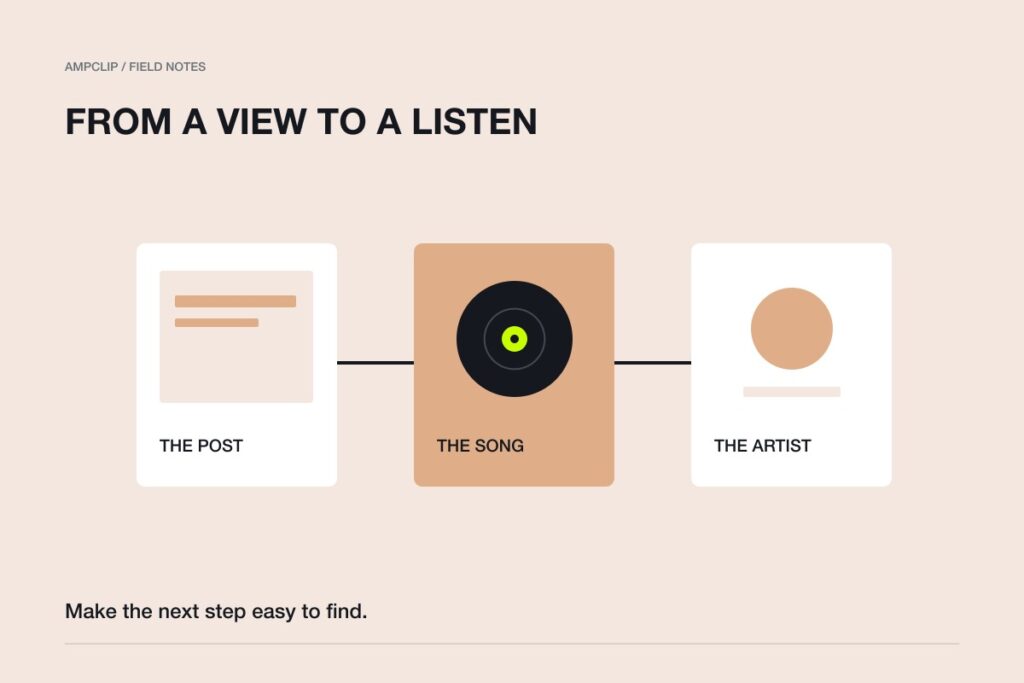
Preview the words on a phone. Check the available excerpt, make the artist and title easy to find, and replace every bracketed prompt. Viewers control their swipes, so the sequence should make sense without an exact slide-to-beat sync.
AmpClip can prepare editable photo posts around your track’s mood and themes. Review the sequence and images, then choose the sound and excerpt and finish publishing in TikTok.
Slideshow questions
Must the song title be on slide one?
No. An announcement may benefit from it; a story can reveal it later. Keep a route to the track available either way.
Should I use lots of slides?
Use the number the idea needs. Our Photo Mode methodology reports observations from a non-random collection, not a guaranteed optimum.
Can I use the creator’s pictures?
A reference link does not grant image rights. Use your own photos or material you have permission to publish. The original scripts’ image directions describe what to find or make, not an asset license.
What should I measure?
Track post exposure alongside signs of interest in the song. Compare results at similar post ages and use the measurement guide before attributing streaming changes to a carousel.