Pitching a song to Spotify playlists starts with knowing who you are pitching. Spotify’s editors review unreleased tracks through Spotify for Artists. Independent curators have their own submission routes, often for music that is already out. Neither route guarantees a placement.
For an independent artist, a sensible approach is to submit the editorial pitch before release, contact a small number of relevant independent curators, and keep promoting the song while you wait.
Which kind of playlist are you trying to reach?
| Playlist or discovery route | Who selects the music? | Your next step |
|---|---|---|
| Editorial playlist | Spotify’s editors | Use Spotify for Artists for an eligible unreleased song. |
| Independent playlist | A curator outside Spotify | Find the curator’s published submission instructions. |
| Personalized recommendations | Spotify’s recommendation systems | Keep distinct from a direct editorial or curator pitch. |
Before making a contact list, listen to the playlists. A large playlist that doesn’t suit the track is a weaker prospect than a smaller one whose audience regularly hears music like yours.
How do you submit a Spotify editorial pitch?
Spotify’s current song-pitching instructions cover these essentials:
- Deliver the release through your distributor early enough to allow processing time.
- In Spotify for Artists, open Music → Upcoming and select the unreleased song.
- Complete and submit the pitch.
- Submit at least seven days before release to have that song included in your followers’ Release Radar.
Admins and editors can pitch one song at a time. Songs already released, compilations, and tracks where you are only a featured artist aren’t eligible for this song-pitching route. Placement isn’t guaranteed.
Treat seven days as the minimum pitch window, not your entire distribution schedule. Check your distributor’s delivery guidance and build in time to resolve missing metadata or an incorrect artist profile.
What should you put in the pitch?
Help an editor understand the music and the context around it. Start with the song rather than a prediction of its success.
Prepare these facts before opening the form:
- The track’s sound: instrumentation, energy, genre, and language.
- The subject: what is happening in the lyric, or what the instrumental expresses.
- The recording: collaborators or production choices that matter.
- The release context: a related show, video, or campaign you have actually arranged.
- The audience: a specific community or listening situation that fits.
Spotify’s playlist editors have described useful pitches as context about the song, artist, collaborators, and plans. Their advice is a reason to explain your release clearly, not to invent a bigger campaign.
A hypothetical pitch
The following is invented sample copy, not a pitch known to have secured a placement:
“Nora Vale’s ‘Last Bus Home’ is a quiet indie-pop song about leaving a hometown without feeling ready. A close vocal sits over fingerpicked guitar, brushed drums, and a chorus that opens into stacked harmonies. Nora wrote it after moving cities. Release-week posts will show the original voice memo and an acoustic performance; a hometown show follows later that month.”
This gives someone a sound, a story, and a plan. Replace every detail with something true about your own release. Avoid filling limited space with “the next big hit” or “for fans of every genre.”
How do you find independent Spotify curators?
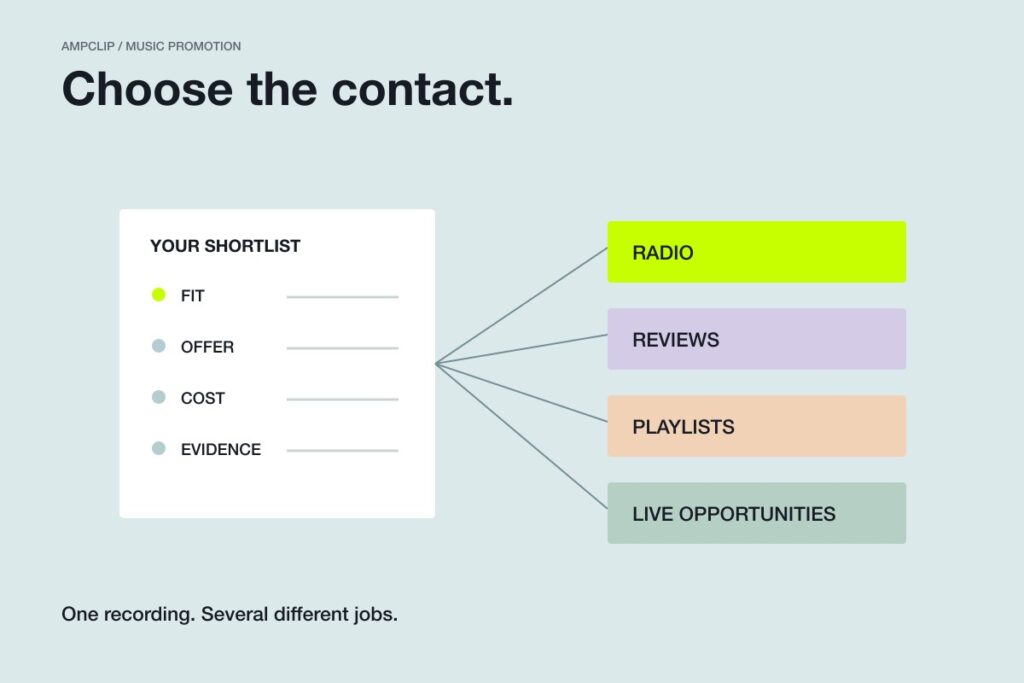
Build a short list from playlists you would want to appear on even if their follower counts were hidden.
For each one, check:
- Recent activity: has the curator updated it lately?
- Musical fit: do several current tracks suit your song’s sound?
- Identity: is there a clear person, publication, or organization behind it?
- Submission route: do they request a form, email, or another method?
- Terms: are they promising attention, a review, or an actual placement?
A real example: Indiemono’s submission form
Indiemono’s published submission route asks for a public Spotify track link for released music, with mood tags to help categorize it. Unreleased demos have a separate route. The site describes submissions as free and says selection and feedback aren’t guaranteed.
The useful lesson is procedural: a curator may want a live Spotify link while Spotify’s editorial tool needs an unreleased song. Read the instructions before sending the same message everywhere.
This example describes a real submission process; it is not a promise that Indiemono will accept your track.
What does a curator email look like?
Use email only when the curator publishes it as a submission channel. If they ask for a form, use the form.
Here is a hypothetical message:
Subject: Song submission for PLAYLIST NAME — ARTIST, TRACK
“Hi NAME,
I found PLAYLIST NAME through TRACK ALREADY ON IT. My new song TRACK might fit its quieter guitar-led selections: it has a close vocal, brushed drums, and a chorus about leaving home.
Spotify link: TRACK LINK
Thanks for listening,
ARTIST”
Keep the first message easy to scan. Don’t attach a large audio file unless requested. Don’t write a false personal connection or imply the curator owes you a response.
Should you pay for playlist promotion?
Separate a legitimate service’s stated work from a promise of streams or placements. Spotify warns that third-party services guaranteeing streams or paid playlist placement can violate its terms.
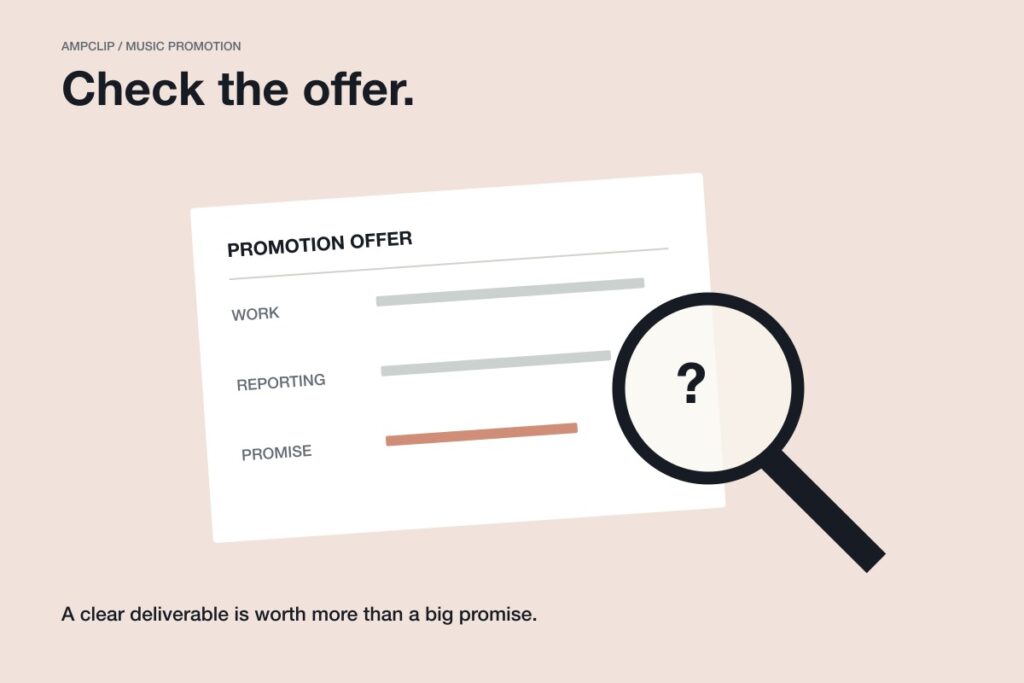
A guaranteed result is not a shortcut around the official process. If you consider paying for campaign work, ask exactly what will be done, who controls the playlists, and how outcomes will be reported. Avoid offers that cannot explain their audience.
What should you track after pitching?
Keep a simple log: curator, playlist, submission date, route, response, and any placement dates.
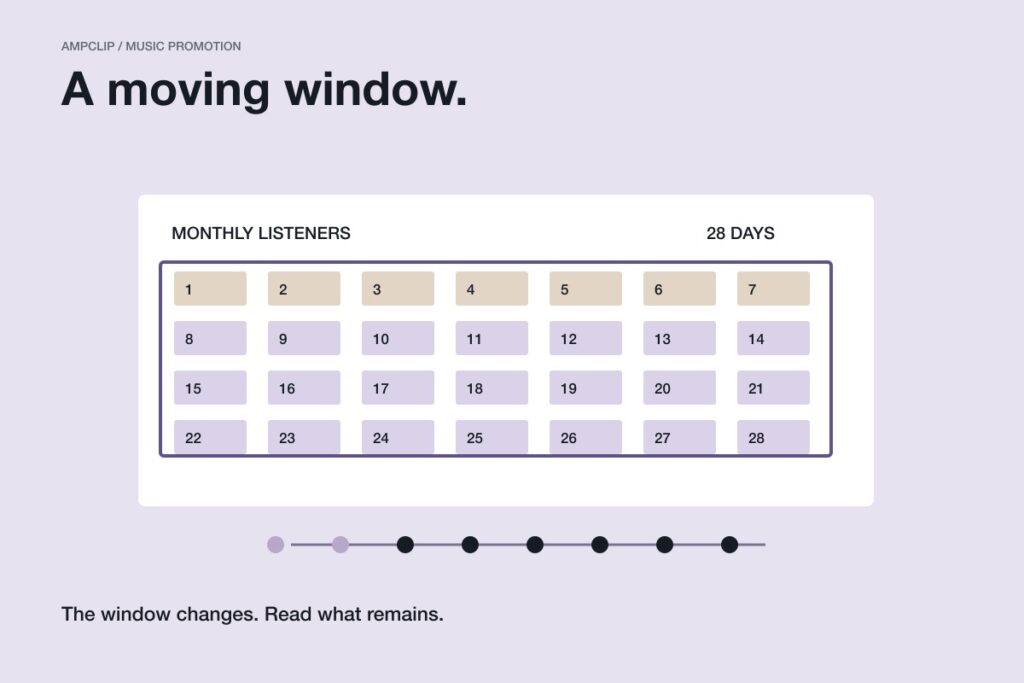
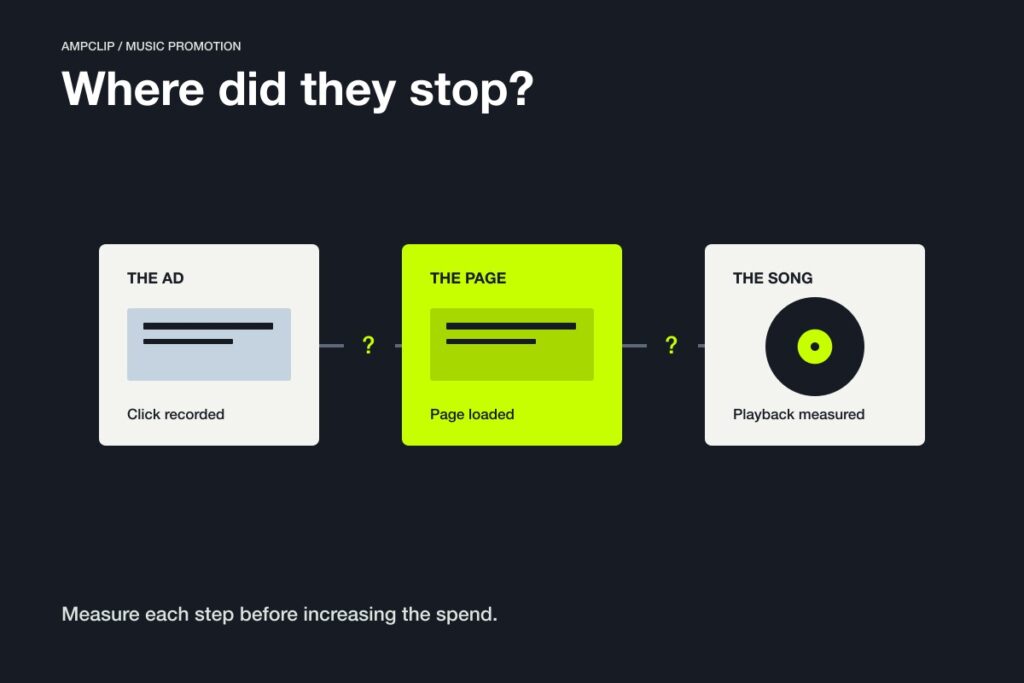
Then review listener behavior around a placement. Did listening continue after the song left the playlist? Were there saves, repeat listeners, or new followers? Those questions are more useful than treating a screenshot of a placement as the whole result.
Other activity may happen at the same time: social posts, live shows, press, or another playlist. A stream increase during a placement is evidence worth investigating, not proof that the playlist caused all of it.
Frequently asked questions
Can I pitch a song that is already out?
Not through Spotify’s editorial song-pitching tool. You can still look for independent curators accepting released tracks and continue promoting the release.
Does pitching guarantee an editorial playlist?
No. A clear pitch helps communicate the release; it doesn’t create an entitlement to placement.
What should I do if no playlist picks it up?
Keep reaching listeners through content, shows, fan communication, and relevant communities. Use our guide to promoting a song after release to plan that work.
A playlist pitch is one action in a release campaign. Give it care, submit it on time, and keep building reasons for people to listen.