SubmitHub or Groover may be worth a limited test when you can find relevant curators and you value the specific consideration or feedback offered. Neither a reply nor a playlist acceptance establishes that you will gain a lasting audience.
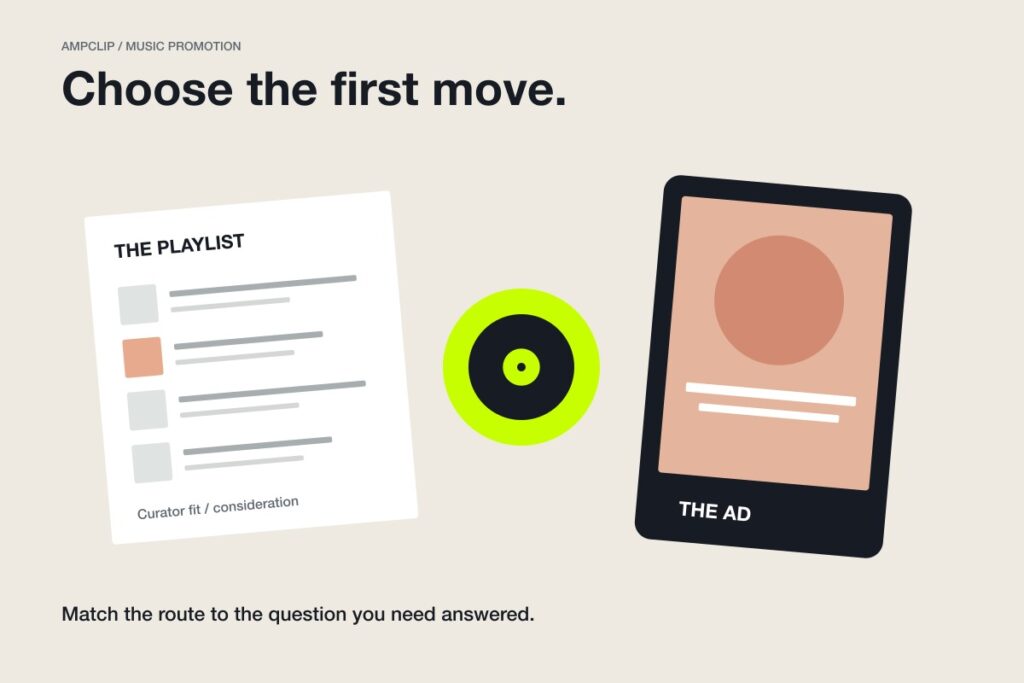
Choose by the contacts you can reach and the current offer in front of you. A service with many curators can still have very few suitable for your recording.
Why do artists report such different experiences?
A March 2024 Reddit discussion includes artists describing useful feedback, disappointing placements and very different outcomes across the two services. These are self-reported accounts, not a controlled comparison.
The question “did it work?” can mean at least four things:
- Did someone consider the recording and reply?
- Did the song receive a feature, placement or other opportunity?
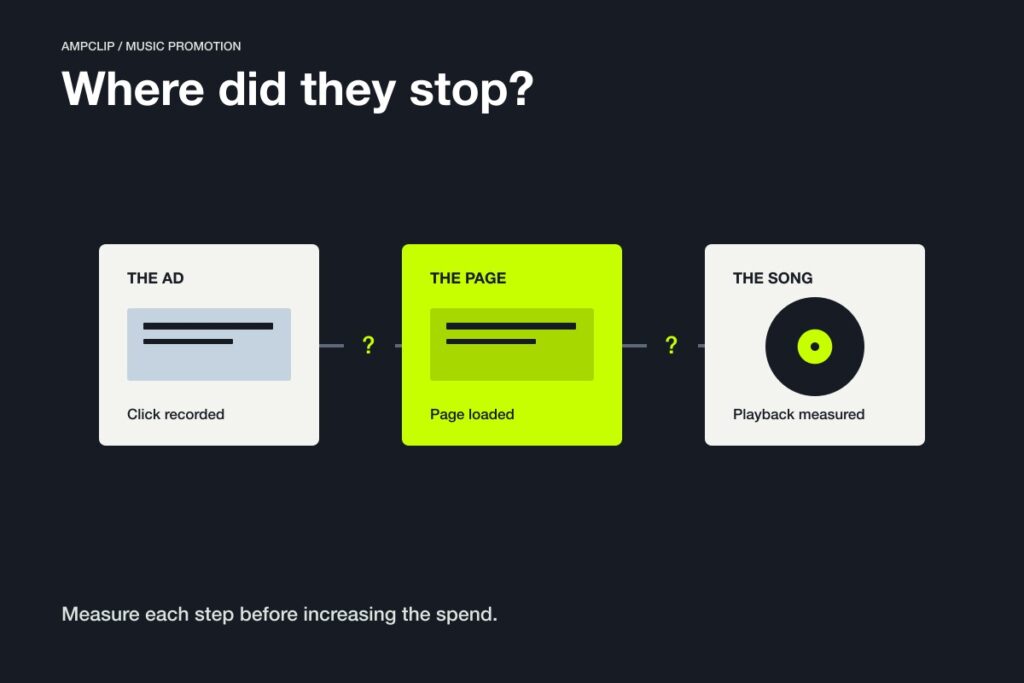
- Did that exposure lead to observable listening?
- Did people return to the artist later?
A campaign can satisfy the first question and disappoint on the other three. Decide which result you are paying to pursue before judging a response rate.
What do the documented offers say?
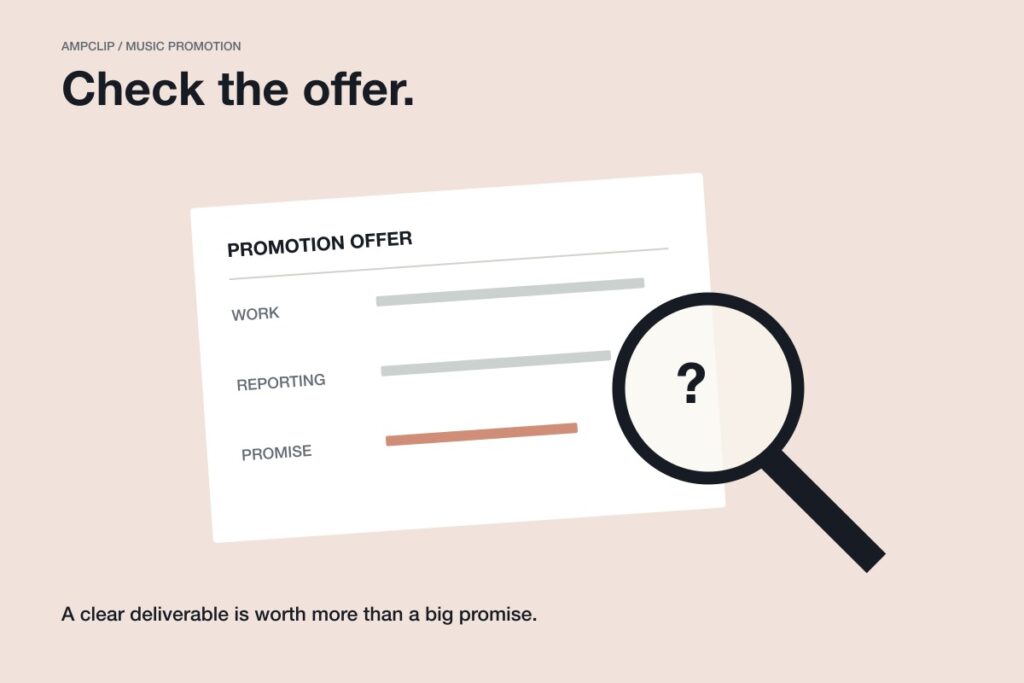
This comparison covers the submission and feedback offers described below, not every additional product sold by either company. Terms checked on October 14, 2026; confirm the offer at checkout.
| Detail | SubmitHub premium curator submissions | Groover curator/pro submissions |
|---|---|---|
| Scope | A premium submission with stated listening, response and feedback conditions | A submission to a selected curator or music professional |
| Response provision | The current refund policy specifies a response within 72 hours | The overview specifies feedback within seven days |
| Listening/feedback terms | At least 60 seconds listened to; at least 20 words of feedback if declined. A listening-instead-of-feedback option has a different listening requirement | The overview describes a feedback process; read the selected contact’s offer for its particulars |
| Nonresponse remedy | Premium-credit return when the stated conditions are not met | Grooviz returned for unanswered submissions |
| Pricing check | Inspect the selected curator’s credit charge and the actual credit purchase cost | The overview lists two Grooviz for a standard contact, with some top contacts costing four or six; one Grooviz is listed as €1 |
| What this does not establish | A public feature, audience growth or streams | A public feature, audience growth or streams |
Sources: SubmitHub’s current refund policy and Groover’s service overview.
A returned service credit is different from cash back. SubmitHub also lists separate conditions for influencer submissions and SubmitHub Direct. Do not apply the premium-curator rules to every offer carrying the same brand.
Spotify also advises skepticism toward services charging for playlist consideration without guaranteeing placement. A feedback offer still requires due diligence; it is not an endorsement from Spotify. Spotify’s education center
Check the shortlist before choosing the platform
Search for contacts first. Buy credits after you know why those contacts belong on your list.
For each potential submission:
- Open the outlet or playlist, rather than relying on its profile card.
- Listen to enough current tracks to understand the selection.
- Check language, mood, production style and release requirements.
- Identify the person or outlet behind the offer.
- Read the stated consideration, feedback or sharing terms.
- Record a specific reason your song fits.
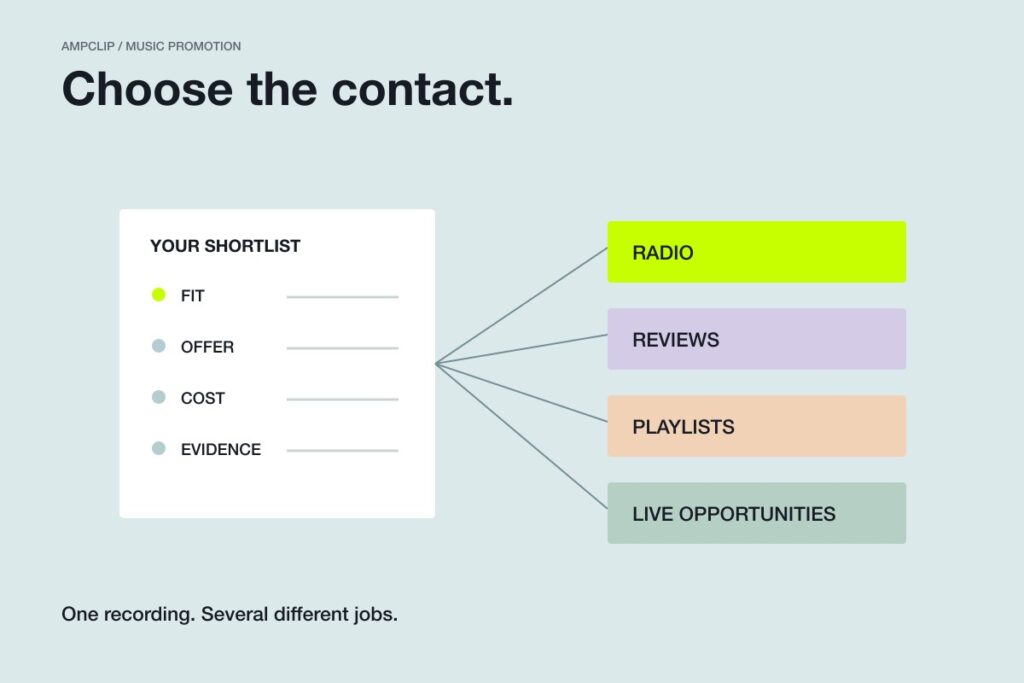
If you are seeking radio, coverage or professional feedback, a playlist-only shortlist will not answer your question. Keep the desired outcome attached to each contact.
Our Spotify playlist-pitching guide covers the pitch itself. This guide is about deciding whether to pay for a particular submission opportunity.
Use this curator-fit sheet
| Contact | Current selection or work checked | Why this recording fits | Cost and offer | Decision |
|---|---|---|---|---|
| [Name and URL] | [Dated examples you actually reviewed] | [Specific connection] | [Credits, cash equivalent, promised process] | [Submit / research / skip] |
Skip a contact when the only reason is “large following.” A public follower total does not tell you how many people will hear your song.
Also separate unfamiliarity from poor fit. A smaller outlet serving exactly the right scene may deserve a closer look, but that is a reason to investigate its work, not a predicted return.
A real example: MUNE’s goals extended beyond streams
MUNE describes his sound as a mixture of folk, indie pop and French chanson. In an interview published by Groover, he reports playlist, blog and radio coverage, along with bookers proposing future gigs. His EP Assis au bord du monde was released in January 2025. Read MUNE’s account.
That is a relevant example of choosing contacts for different jobs: a radio programmer, a reviewer and a venue booker can offer different outcomes. The story does not publish a campaign budget, an attributable stream increase or a completed-gig revenue total.
It is a platform-selected success story, not evidence that Groover will outperform SubmitHub for your track. Its practical lesson is to define the opportunity you want and keep the contact list and delivery record aligned with it.
A worked shortlist decision
Imagine an artist with a quiet, mostly instrumental track built around field recordings. This is an illustrative example.
They find:
- A large playlist that currently favors vocal dance tracks.
- A small radio show that regularly discusses ambient releases.
- A curator whose recent selections match the track’s texture but whose profile excludes instrumentals.
- A reviewer whose current work covers experimental recordings and explains a defined feedback offer.
The large playlist is weak evidence of fit. The exclusion should be respected. The radio show and reviewer deserve a closer look against the artist’s goal.
If only one platform offers relevant contacts, a “both services with equal budgets” experiment may waste money just to make the comparison symmetrical.
How much should you spend on a first test?
Set the amount from what you can afford to lose and the question you want answered.
A practical first round can be a small researched shortlist with a fixed total, followed by a review before another purchase. That is a spending discipline, not a claimed minimum campaign size.
Write the cost in real currency, including any applicable fees. If credits remain in your account, distinguish:
- Cash paid into the service.
- Credits used on this campaign.
- Credits returned and available for another submission.
Otherwise a report can make a campaign look cheaper by treating unused service credit as refunded cash.
Track consideration, acceptance and publication separately
| Stage | Evidence to save |
|---|---|
| Submitted | Contact, date, track and cost |
| Response received | Actual response and date |
| Accepted | What the contact agreed to do |
| Published or placed | Working URL and date checked |
| Later review | Still live, changed or removed; available observations |
| Listening context | Same-period music data and other promotion running |
An acceptance that has not been published is still pending delivery. A live feature is a concrete output even if its listening effect is unknown.
Calculate a response rate or a placement count only from the relevant completed records. Keep unresolved submissions visible.
What should you do with the feedback?
Look for comments that identify something specific you can evaluate.
“Does not fit our current selection” is a curator decision. It is not a verdict on the recording’s artistic value. A technical observation may be worth checking with someone you trust, particularly if several independent listeners describe the same issue.
Do not rewrite a finished song to satisfy every contradictory comment. Separate:
- Fit with the outlet.
- Personal taste.
- A concrete production or presentation issue.
- A response too vague to act on.
Useful feedback can influence the next pitch, excerpt or recording. It should not automatically trigger another round of spending.
What would make the next round worth doing?
Before repeating, answer:
- Which contacts were genuinely relevant?
- Which promised processes or outputs were delivered?
- What evidence suggests an audience connection?
- Which part of the shortlist or pitch would change?
- Would you choose these contacts again at the actual cost?
You do not need a winner between the companies to make a good decision. “This particular shortlist was worth another round” is more defensible than “this service works for every indie artist.”
Common questions
Is paying for feedback the same as buying a playlist slot?
They are different offers. Read the actual deliverable and Spotify’s restrictions on guaranteed paid placements. A platform label does not replace checking the individual offer.
Does a rejection mean my music is bad?
No. It may reflect taste, fit, timing or selection limits. Evaluate any specific feedback on its merits.
Should I try both at once?
You can if both have a relevant shortlist and you can record the outcomes separately. Use a comparison to learn about your options, rather than treating a larger spend as a commitment you must make.