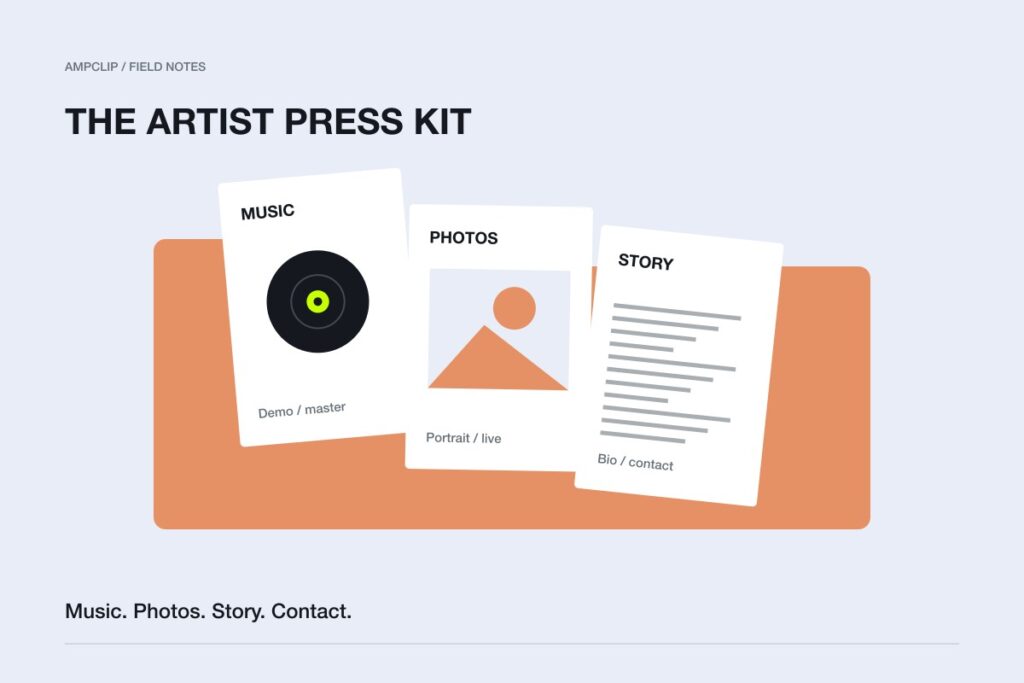
A music artist EPK is an electronic press kit: one place where a journalist, promoter, or potential collaborator can find the information they need about you. A useful kit includes your music, a short bio, usable photos, current release details, and a clear contact.
Start with a page that is easy to open and maintain. Add downloadable files where they help. The goal is to make covering or booking you straightforward.
Who is your EPK for?
Decide which request the kit should help someone complete.
A journalist needs an accurate story, credits, music, and images they can publish. A booker needs a sense of the live act, practical contacts, and production information. A collaborator may mainly need a concise introduction and examples of your work.
One page can serve these audiences, but put the most common request near the top. If you’re promoting a single, the release belongs there. If you’re actively booking shows, make the live performance and booking contact prominent.
A real EPK example: John Goldsby
Bassist John Goldsby’s official press kit groups several kinds of material in one place: bios in multiple lengths, high-resolution photographs with credits, release-specific kits, and live production documents.
The useful feature is the organization. Someone can find a short introduction without editing a full biography, or get technical information without searching through publicity copy. You can borrow that structure without needing the same career history.
What should a music artist EPK include?
1. A clear introduction
Put your artist name, a one-sentence description, and your current focus at the top.
For example, this hypothetical introduction tells a reader what to expect:
“Nora Vale makes guitar-led indie pop about leaving home and learning to belong somewhere else. Her new single ‘Last Bus Home’ is out on RELEASE DATE.”
Avoid leading with “boundary-breaking visionary” unless the next sentence gives someone concrete information. Sound, subject, location, and current work are easier to use.
2. Music someone can hear immediately
Choose a few representative tracks and identify the current release. Use working links or embeds. Label private previews clearly and keep them accessible to the intended recipient.
Don’t make a stranger search a whole catalog to discover which track you’re pitching. If your live sound differs from the recording, include a good live performance too.
3. Short and longer bios
Provide a short paragraph and a more detailed version. The short version helps with event listings and introductions. The longer version can explain your background and the story behind the music.
Keep both versions consistent about names, release titles, dates, and credits. A shorter bio should be a useful introduction in its own right, rather than a longer bio cut off halfway through.
4. Photos with credits and permission
Offer at least one portrait and one image that suits a wider layout. Use descriptive filenames, such as ARTIST-PRESS-PORTRAIT-PHOTOGRAPHER.jpg.
Beside the files, state:
- Who photographed them.
- The credit that should appear.
- Whether they are approved for press use.
- Any restrictions the recipient needs to know.
Check permission with the photographer. Having a copy of an image does not establish that you can authorize other people to publish it.
5. Release details and credits
Give the exact artist name, release title, release date, format, and listening link. Add relevant songwriter, producer, performer, or artwork credits.
If you’re sending an advance preview, make the public release date obvious. Mention an embargo only when there is a real agreement or request behind it; a date typed into a document doesn’t guarantee that recipients have accepted it.
6. Selected evidence
Include a small number of useful press links, live clips, or documented milestones. Label figures with a source and date.
“Performed at VENUE on DATE” is useful if true. A list of unsupported adjectives or an unexplained screenshot of a dashboard is less helpful.
If you have no press coverage, leave that section out. Your songs, story, photographs, and practical information can still make a complete kit.
7. Contact and live information
State who handles press and booking, even if both contacts are you. Include the email directly so a failed contact form doesn’t become a dead end.
For live work, link a stage plot and technical rider if needed. Keep these separate from the main biography and describe your current lineup accurately.
Copy this EPK outline
ARTIST NAME — Electronic Press Kit
Introduction: One sentence about the sound and the current release or live act.
Listen: Current single, one other representative recording, and a live clip where relevant.
Current release: Title, date, short story, credits, and public or private listening link.
Short bio: A concise introduction suitable for a listing.
Longer bio: Background, musical choices, and the current chapter.
Press photos: Download links, photographer credits, and usage information.
Selected coverage or milestones: A few sourced items, if available.
Live information: Performance clip, lineup, stage plot, and technical rider.
Contact: Press and booking email addresses.
Last updated: A visible date that helps recipients judge whether the kit is current.
What could a first-release kit look like?
Here is a hypothetical example, not a real artist’s press kit:
Artist: Nora Vale, an independent singer-songwriter.
Current focus: Debut single ‘Last Bus Home.’
Story: Written after a move to a new city; recorded with a close vocal and a small acoustic arrangement to preserve the voice-memo feel.
Assets: Single artwork, two approved press photos, a listening link, short bio, lyrics, and recording credits.
Contact: Nora’s dedicated artist email.
That is enough material to explain a release. There is no need to fill the gaps with invented praise, awards, playlist results, or audience numbers.
Should your EPK be a website or PDF?
A web page is a practical starting point because you can update it and send one link. A PDF can be useful when someone requests a downloadable summary.
If you offer both, keep their facts aligned. Avoid putting essential listening links only inside a PDF, and check that download folders open without asking the recipient to request access.
A simple kit that works on a phone is more useful than an elaborate design that hides the music.
Check your kit before sending it
Open the link in a browser where you aren’t signed in. Then:
- Play the music and video.
- Download the photos.
- Check file permissions.
- Confirm the contact address.
- Read every date and credit.
- Remove outdated campaign details.
- Check that the page is comfortable to read on a phone.
Ask a friend to find your current single and booking contact. If they have to hunt, change the layout.
Frequently asked questions
Do I need an EPK before I have press coverage?
Yes, if you are contacting people who need organized information. Include the assets you have and omit an empty press section.
Should I send the whole kit in every email?
Send a short, relevant introduction with the kit link. Let the recipient choose the materials they need.
Is an EPK the same as a release campaign?
No. It supports a campaign by making information accessible. Use a music marketing plan to decide who you are approaching, when, and why.
Your first version can be small. Make it accurate, easy to use, and ready for the next real request.