Choose playlist pitching when you can identify curators whose actual listening audience fits your song. Choose Meta ads when you have a compelling creative idea, a working listening destination and a way to measure the next action. If neither is ready, prepare those assets before spending.
The useful comparison is what each route lets you buy, learn and change. A playlist approval, an ad click and a returning listener are different outcomes.
An April 2026 Reddit discussion shows artists weighing exactly this choice after trying both routes. Their reports are useful questions to investigate, rather than a reliable ranking of the channels.
First, what do you mean by playlist promotion?
Four offers often get mixed together:
| Route | What happens | What you control |
|---|---|---|
| Spotify editorial pitch | You submit an eligible unreleased song through Spotify for Artists | The information in your pitch |
| Independent curator outreach | You contact a curator whose playlist suits the recording | Your shortlist, message and follow-up |
| Paid submission or feedback | A service charges for a defined consideration or feedback process | Which offers you select and your spending cap |
| Guaranteed streams or paid placement | A seller promises a listening total or playlist slot | The promise does not establish genuine listener interest |
Spotify says services selling guaranteed streams or guaranteed playlist placement for money violate its terms. That boundary matters before any cost comparison. Spotify’s policy
An eligible editorial pitch is a separate task you can do alongside your other promotion. Spotify’s current song-pitching process is for unreleased music, and consideration does not guarantee selection. See Spotify’s instructions and our playlist-pitching guide.
This article compares independent pitching and paid consideration with ads on Facebook or Instagram. It does not compare them with Spotify’s own advertising products.
What can each route help you learn?
| Question | Playlist pitching | Meta ads |
|---|---|---|
| Does this recording fit a particular curator’s selection? | A directly relevant question | An ad cannot answer it |
| Which introduction makes someone investigate the song? | Hard to isolate through someone else’s playlist | You can compare creative introductions and their observed response |
| Can I choose the exact presentation? | Usually limited by the curator’s format | You choose the ad and destination |
| Can I stop spending? | Set a submission cap; already-used submissions remain spent | Set a campaign limit and monitor delivery |
| Will people return later? | Requires separate observation | Requires separate observation |
| Does a higher activity total prove more fans? | No | No |
Do not assume playlists always deliver passive listeners or ads always deliver committed fans. Those are hypotheses about particular campaigns, not properties you can purchase with the channel.
A listener may discover a track through a playlist and later seek out the artist. Someone may click an ad and decide against listening.
When would you start with playlist pitching?
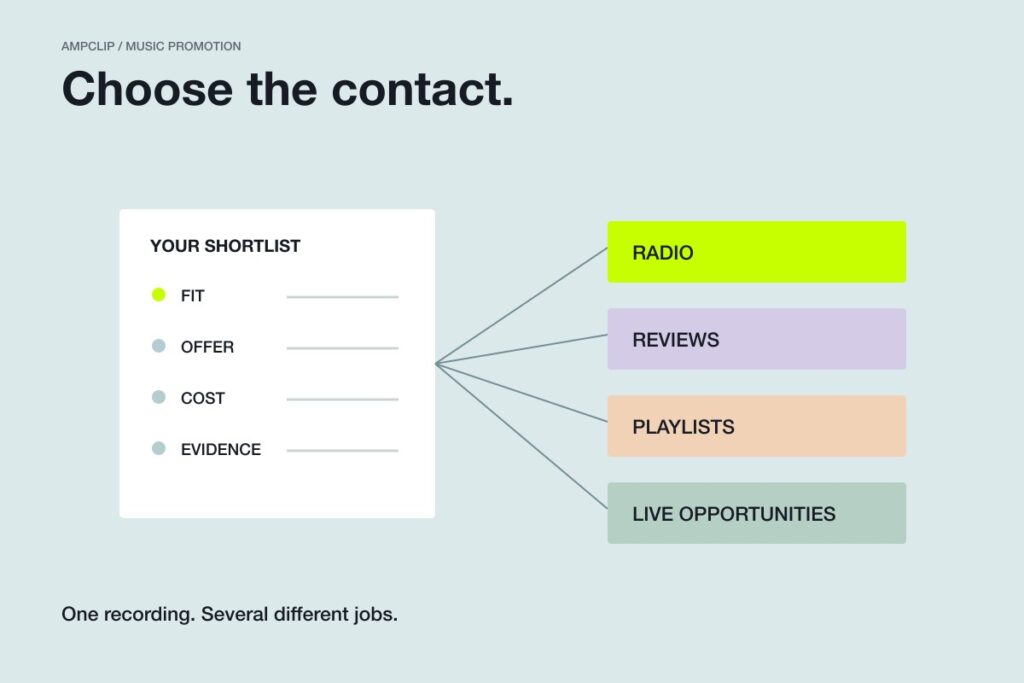
Start here when you can make a short, convincing shortlist.
Listen to the actual playlists. Check whether your recording belongs beside their current tracks. A broad genre tag is not enough: a quiet acoustic recording and a loud guitar track can both be “indie.”
For each prospect, write one sentence:
This song fits because [specific production, mood or listening situation] matches [something currently present in the selection].
If that sentence stays vague, keep researching rather than buying more submissions.
Playlist pitching may also suit an artist who already has a clear pitch and finished recording but lacks usable ad material. That does not mean every submission service is worth buying. Review the actual offer and current terms before committing money.
When would you start with ads?
Start here when you have something concrete to test in front of listeners.
You need:
- A passage from the recording that suits the idea.
- A clear visual or opening that gives the right person a reason to listen.
- A destination that works on a phone.
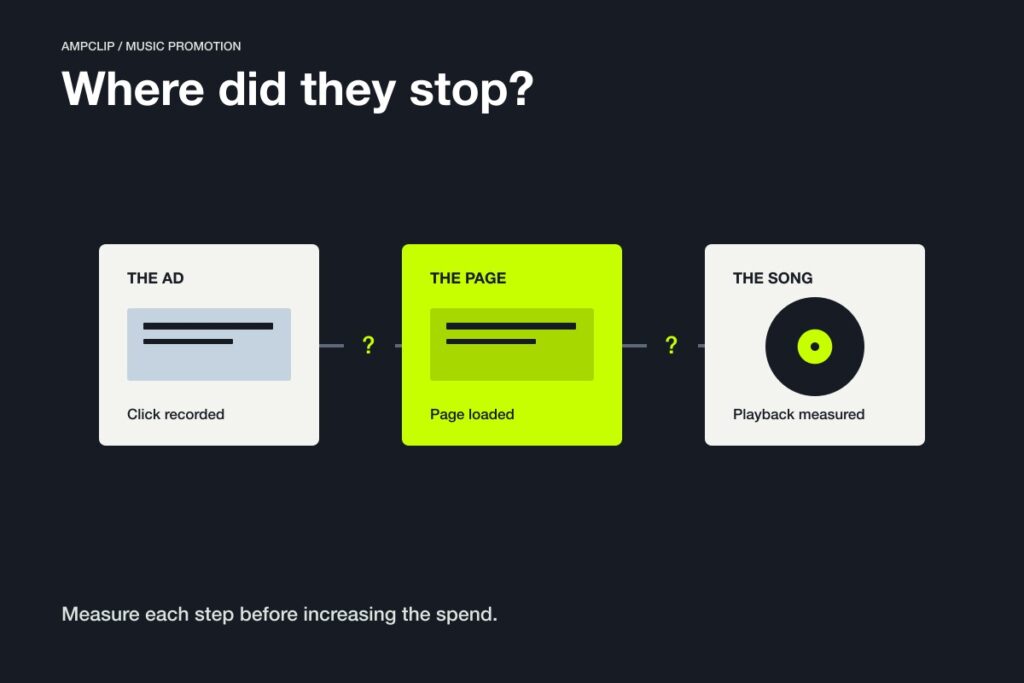
- A defined action you can observe.
- A spending cap you can afford even if the test produces no useful growth.
The creative should introduce the music honestly. If an ad sells a joke or a dramatic story that the listening destination does not fulfill, strong click numbers can still teach you very little about demand for the track.
Use our first music-ad campaign guide for the preparation steps. If you do not yet have a clear listener hypothesis, start with audience research.
A worked decision: the same song, two different starting points
These are fictional planning situations, not campaign results.
Artist A has a finished folk song and six carefully researched curators. They have no finished ad asset and little time to learn a new campaign interface. A small outreach round can answer a useful question now: which of those specific curators considers the track suitable?
Artist B has a reflective pop song and two distinct visual introductions. Their listening page and tracking have been checked. An ad test can help compare the introductions’ observed outbound response. It cannot tell them which creative caused every stream.
Neither artist needs to divide a tiny budget between every available channel. The first test should produce a result they can interpret and a next action they can afford.
A real combined campaign: Council
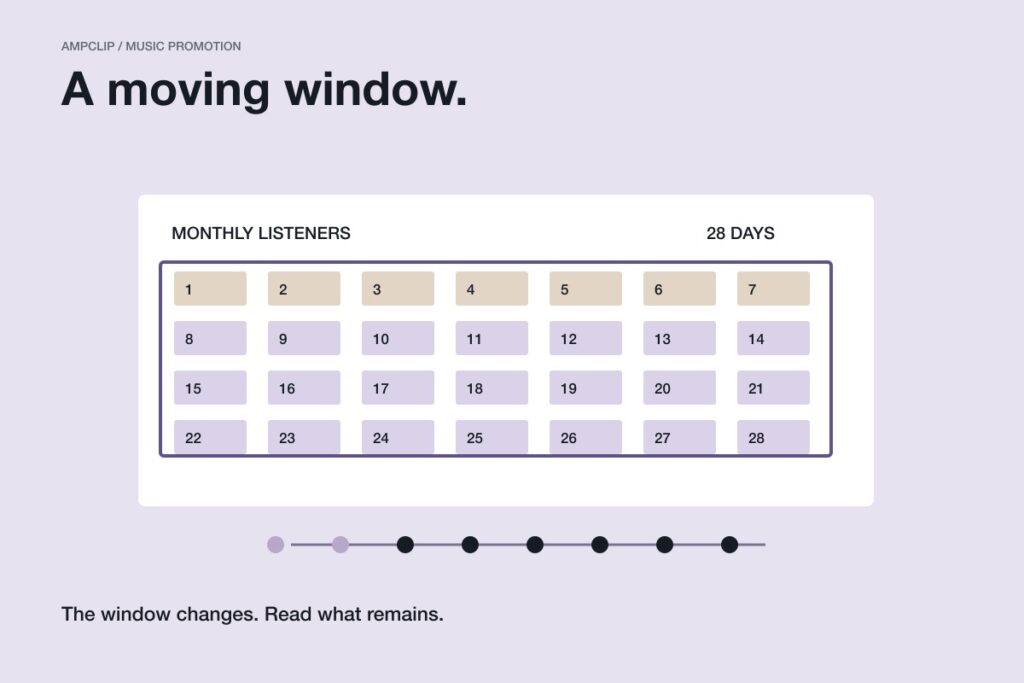
Council is an indie/alternative act whose campaign combined a custom playlist, Meta ads and curator outreach. GPM Music Group reports a $2,000 spend over two months, with monthly listeners moving from 7,000 to 30,000 and a reported 28-day stream total moving from 13,000 to 52,000. These are the agency’s figures. Read its Council report.
The example shows why a successful combined campaign cannot settle “playlists or ads?” Its published totals do not isolate the contribution of each route, separate out what would have happened without the work, or independently verify listener acquisition.
When an agency presents a similar case, ask for the exact reporting windows, the work included in the price and the outcome attached to each channel. Treat the overall listener change as context; dividing it into the spend does not establish a measured cost per acquired listener.
Copy this campaign decision sheet
| Field | Fill this in before spending |
|---|---|
| Track and version | [Exact recording] |
| Listener hypothesis | [Who might care, and why] |
| Route | [Curator outreach / paid consideration / ads] |
| Reason for this route | [What is ready now] |
| Maximum spend | [Amount, currency and any fees] |
| Observed action | [Defined response or event] |
| Other activity | [Release, organic posts, gigs, press, other campaigns] |
| Review dates | [Initial check and later listening review] |
| Stop or revise when | [A broken path, poor fit, spending limit or other explicit condition] |
Choose review dates that suit the actual delivery and reporting schedule. A submission may still await a response after an ad has finished. Comparing their totals on the same calendar day can be misleading.
What should you measure after either campaign?
Keep three records:
- What you paid for: submissions, work performed or advertising delivery.
- What was observed directly: responses, live placements, landing-page activity or service-button actions.
- What happened in listening data: the track’s streams, audience activity and other available measures over the recorded period.
Spotify’s Source of streams describes where playback happened inside Spotify. It does not identify the external ad or curator email responsible for each listen.
Record other promotion alongside the numbers. If you run pitching, ads and social content together, their combined listening result does not reveal each channel’s contribution.
A careful report can still be useful: “Three placements went live; our artist-profile listening also rose during the campaign. We cannot assign that increase to a particular placement.”
Should you combine playlists, ads and organic posts?
You can, when each has a clear job and the workload fits.
Pitching can put the recording in front of relevant selectors. Ads can distribute a particular presentation. Organic posts can give people more reasons to recognize the artist or return to the song.
There is no verified recipe in this guide for triggering Spotify recommendations. Avoid building a budget around that promise.
For a song that still needs visual ideas, AmpClip’s hook library can help you develop complete organic photo posts. AmpClip prepares editable content; it does not book playlists, manage Meta ads or turn post views into a guaranteed stream count.
Common questions
Which is cheaper per stream?
There is no reliable universal answer here. Campaign reports may use different attribution rules, periods and definitions. Compare your own costs and observed outcomes without treating every stream during a campaign as purchased by that campaign.
Should I split my first $100 between both?
Only if each part is large enough to answer a useful question and you can prepare both properly. Our first-$100 guide gives other ways to spend a small budget, including preparing better creative.
What if I do not have money for either?
Use direct outreach and repeatable content work that fits your time. The free promotion guide helps you choose a manageable starting routine.